Home Blog Page 61

Buttigieg on Concerns $15 Minimum Wage Would Hurt Small Businesses: ‘I’m Not Interested in Who It Hurts’

0
Former Transportation Secretary Pete Buttigieg stated he was “not thinking about who it injures” when Patrick Bet-David alerted that a $15 base pay might put small companies at a downside versus significant corporations.

The exchange came throughout Buttigieg’s look on the “PBD Podcast” launched Friday, where the 2 gone over taxes, financial policy, and the Democrat Party’s future.

Bet-David challenged Buttigieg over the expense of a greater wage requirement, stating business such as Amazon, Walmart, and Target might manage boosts that an in your area owned store may have a hard time to cover.

“Who do you believe is affected if you raise the base pay to 15 dollars an hour? Amazon, Walmart, Target, they can raise it,” Bet-David stated.

He provided a theoretical organization in Hope, Arkansas, to discuss his issue.

“The guy that can’t manage it is that little store in Hope, Arkansas. Amazon’s throughout the street, Walmart’s throughout the street, and Joey’s Place that’s been there for 6 years runs out organization,” he continued. “Raising the base pay harms that guy. It does not injure the Fortune 500 business at all.”

Buttigieg reacted:

I’m not thinking about who it injures. I’m interested in who it assists. We have sufficient experience now, both as a nation and states doing it by themselves, that we understand you can do it slowly enough that it does not eliminate the small company owners.

Rep. Ro Khanna (D-CA) was more specific when inquired about small companies not able to pay for a $15 base pay in February 2021.

“We do not desire low-wage organizations,” he informed CNN. “I do not desire small companies that are underpaying workers.”

Democrats have actually given that looked for a greater federal rate. Rep. Bobby Scott (D-VA) and Sen. Bernie Sanders (I-VT) presented legislation in April 2025 to raise the base pay to $17 by 2030.

“Raising the base pay benefits employees, helpful for service, and great for the economy,” Scott stated.
Republican Glenn Youngkin banned a costs in March 2025 that would have raised Virginia’s base pay to $15 by January 2027. The then-governor argued that a consistent statewide requirement ignored distinctions in regional economies and living expenses, calling the proposition “destructive” to small companies.

Sen. Bill Cassidy (R-LA) likewise alerted throughout an April 2025 Senate argument that a proposed $17 federal minimum would threaten tasks at companies with little space to take in greater payroll expenses. He stated, “Increasing the wage by more than 230 percent even over 5 years will ruin tasks, affecting backwoods and low-margin small companies that can not manage such a boost. A law mandating a greater base pay does not imply much to an employee who loses his/her task due to the fact that of this.”

Re-releases of Wing Commander, Ultima titles hit Steam and GOG

0

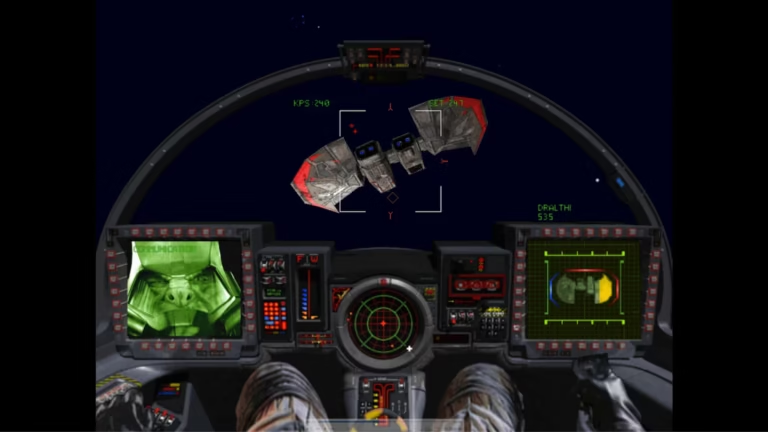
Many individuals are not huge fans of video game publisher EA today for excellent factor, however for those who keep in mind a much better time in the 1990s, there’s a little great news. Twenty-five timeless video games from that EA period have actually been gently remastered and upgraded, then positioned for sale on Steam and GOGconsisting of numerous Wing Commander video games and almost the whole Ultima series.

Below is the complete list of remastered or re-released video games:

  • Roadway Rash: 30th Anniversary Edition
  • Wing Commander: 35th Anniversary Edition
  • Wing Commander II: Vengeance of the Kilrathi: 35th Anniversary Edition
  • Wing Commander III: Heart of the Tiger: 30th Anniversary Edition
  • Wing Commander IV: The Price of Freedom: 30th Anniversary Edition
  • Wing Commander Prophecy: 30th Anniversary Edition
  • Privateer 2: The Darkening: 30th Anniversary Edition
  • Wing Commander: Privateer
  • Wing Commander: Academy
  • Wing Commander: Armada
  • Strike Commander
  • Style Hospital
  • Crusader: No Remorse
  • Crusader: No Regret
  • Ultima I: The First Age of Darkness
  • Ultima II: The Revenge of the Enchantress
  • Ultima III: Exodus
  • Ultima IV: Quest of the Avatar
  • Ultima V: Warriors of Destiny
  • Ultima VI: The False Prophet
  • Ultima VII: The Complete Edition
  • Ultima VIII: Gold Edition
  • Ultima IX: Ascension
  • Ultima Underworld I
  • Ultima Underworld II

The story behind 7 remasters

In a prolonged article released today, Jim Vessella, a senior manufacturer at EA, explained the efforts that entered into remastering Wing Commander I-IV and Prediction Privateer 2and Roadway Rash

It’s a long, in-depth story that’s worth reading yourself, however here’s a high-level summary. After dealing with the mainly commonly well-known Command & & Conquer: Remastered Collection in 2019, Vessella composes that he discovered and went to a space at EA’s Redwood Shores school which contained a big archive of improperly identified or arranged physical media from ages past.

In his spare time, and with the assistance of others, he started cataloging this archive and found, to name a few things, that it included practically the totality of the initial masters of Wing Commander III and Wing Commander IV‘s full-motion-video cutscenes.

The story that occurs includes developing a little group of specialists, poring through the video footage 17 hours a day on swing shifts to identify and digitize it, and after that collaborating with a number of crucial neighborhood members– especially Matt Wells, who has actually made neighborhood improvement spots for a few of the Wing Commander video games– to create remasters of those video games.

Why Apple, Nvidia and Tesla Can Block OKXICE From Trading Their Tokenized Shares

0
NBA Set as Google Preferred SourceNBA Follow on Google News

TLDR

  • 67 U.S. issuers have objected to OKXICE’s plan to trade tokenized versions of their shares.
  • Only six companies from the original list have not objected: Strategy, Coinbase, Circle, Robinhood, Securitize and BitGo.
  • The SEC’s innovation exemption gives issuers 30 days to block third-party tokenization.
  • Median holdings in tokenized-stock trading pools were just $92 as of Aug. 31.
  • Rival venue TSV has started trading tokenized shares using an issuer-sponsored model.

OKXICE, the joint venture between crypto exchange OKX and NYSE owner Intercontinental Exchange, wanted to offer round-the-clock trading of tokenized U.S. stocks. The plan is now facing pushback from the companies whose shares it hoped to list. As of Nov. 5, 67 issuers had filed objections.

JUST IN: Meta makes it 7 of 7, as every Magnificent 7 company now says NO to tokenized versions of its shares on OKXICE.

Meta objected on Thursday, joining Apple, Tesla, Amazon, Nvidia, Microsoft and Alphabet in blocking their stock from the OKX and NYSE owner ICE venture.

The… https://t.co/8AnD4mEdgm pic.twitter.com/gVr6KHBn6w

— Coin Bureau (@coinbureau) November 6, 2026

Apple and Meta Platforms are among the latest to say no. Palantir, S&P Global, KLA and Super Micro Computer also joined the list on Thursday. Home Depot, GE Vernova, Nebius, Boeing and ServiceNow objected earlier in the week.

How the Objection Count Grew

The list has climbed quickly over the past two weeks. It stood at 38 on Oct. 28, when Walmart was added. Nvidia, Costco and Nike pushed it to 50 by Oct. 30.

Tesla, Amazon and Netflix brought the total to 56 on Nov. 2. Apple, Home Depot and GE Vernova lifted it to 59 the next day. The count reached 67 on Nov. 5.

Of the 62 companies OKXICE first picked, 56 have objected, according to a CoinDesk tally. That is about 90%. Another tally counts 57 of 63 share classes as blocked.

Eleven of the objectors were not part of the original selection. Microsoft is also among the companies that have objected.


NBA Betpanda


Six names remain without a disclosed objection. Strategy, Coinbase, Circle and Robinhood are on that list. So are Securitize and BitGo, which earlier told CoinDesk they did not plan to object.

The Rules Behind the Veto

The objections stem from a five-year innovation exemption issued by the SEC on Sept. 17. It lets a venue trade blockchain versions of listed stocks without registering as an exchange. If an unaffiliated third party does the tokenizing, the issuer gets 30 days to object in writing.

Silence counts as consent. Once an issuer objects, its stock cannot be handled under the exemption. Companies can still tokenize their own shares, so an objection is not a rejection of blockchain-based securities.

Venues have up to five business days to publish objections. That means the public list can trail issuers’ decisions. The deadline for companies named in the Oct. 4 notice has passed, but OKXICE may not have disclosed every objection.

The exemption also limits scale. A venue can list up to 75 Tier 1 symbols, which cover S&P 500 and Russell 1000 stocks and certain exchange-traded products. Trading in each stock is capped at 0.25% of its prior-month average daily volume.

Tier 2 covers other eligible securities, with a 250-symbol cap and a 2.5% volume limit.

Liquidity and Rival Venues

OKXICE plans to settle trades in stablecoins such as USDC, USDG and USDT. Trading would run through permissioned liquidity pools on the X Layer network. The venture has said neither it nor its affiliates will supply liquidity.

A Dune report cited in the notices found the median holding in tokenized-stock pools was $92 as of Aug. 31. About 81% of the $69 million across 5,484 pools sat in just 78 of them.

Some issuers have explained their reluctance. Applied Optoelectronics said it could not tell how tokens might affect its share price, volume or volatility. It also worried investors would think the company sponsored the token. Nasdaq has said it will keep its shares off venues that do not show real-time best prices or report to the consolidated tape.

Robinhood CEO Vlad Tenev argued in September that a token that does not change shareholder rights should not need company approval. His comments followed criticism from AMC Entertainment CEO Adam Aron over Robinhood’s stock tokens.

OKXICE co-chairman Andrew Cuomo, a former New York governor, said last week that companies outside the initial selection had approached the venture. He did not name them or give a number. He said familiarity with the new market would encourage participation.

Canton-based venue TSV went live this week with tokenized shares of Canton Strategic Holdings. It uses an issuer-sponsored approach that avoids the 30-day objection process. Securitize has also launched tokenized U.S. stocks that are expected to trade on OKXICE.

The SEC’s registry listed three entities that had filed notice to operate under the exemption as of Oct. 26. They were TSV LLC, OKXICE TSV and Kephas Corporation, doing business as Perpetuals.com.

OKXICE may publish more objections in the coming days. It is not yet known whether any large issuers will change their position before trading begins.

I gave my band’s 25-year-old songs an AI makeover, and I wasn’t ready for the result

news

Jack has been a contributing author at MakeUseOf since June 2024, specializing in entertainment and its associated technology. He is passionate about creating engaging content that inspires and informs, having published articles and reviews in several reputable online resources since 2010, including SlashGear, BestReviews, and Ezvid Wiki.

Jack’s work has taken him far and wide, from South America to Europe, South Asia, and the Far East, and his experiences continue to influence his writing. As a graduate with a BA in music technology, he is particularly interested in new developments in this field, including music hardware, music creation software, and music streaming services.

When he’s not researching and trying out the latest software and devices, Jack enjoys riding his motorcycles to far-flung destinations, playing guitar, and creating music and vlogs using Logic Pro and Final Cut Pro on Mac.

Listening back to my old band’s songs got me thinking about how much recording techniques have changed in a quarter of a century, and whether they’d benefit from a modern musical makeover. Rather than spending hours in Logic Pro, I figured a quick, fun experiment would be to run them through Suno and see what its AI music generator could do.

Revisiting Middleman

I gave Suno a simple instruction and let it reinterpret our original

</g0-textarea-recorder-host>””>

science news Tracks in my Suno library.
Credit:

I started with “Middleman,” a chilled-out, funky number, with some interesting instrumentation. I uploaded it to Suno’s free version and selected Simple mode, so I didn’t need to deal with too many intricate production settings.

I described the uploaded recording as a “Relaxed funk song with steel drum solo”, selected Full Song, Voice and Rhythm / Percussion, and gave Suno one additional instruction: “Rework as a more contemporary version while retaining the rhythm.”

The result was an interesting interpretation, given the basic instructions. It certainly cleaned up the recording and sounded fresh and revitalized. However, it lost much of its charm and nuance.

The ambient traffic noises during the intro were gone, as was the steel drum solo, which was a high point of the track, at least as far as I was concerned. I did like the horn parts, which sounded authentic, and the vocals captured the original’s breathy spirit, although for some reason it decided to drop the verses.

Ultimately, I was impressed with how quickly and efficiently Suno created something that sounded decent, even memorable in places. With that said, the original remained a much more convincing and compelling track.

Turning up the volume

All Night Groove gave Suno a different musical challenge

So I was moderately impressed by what Suno did with Middleman, but I wasn’t quite ready to heap praise on AI’s modeling just yet. Next, I wanted to see what would happen with something rockier. “All Night Groove” seemed like a good choice, and this time I gave Suno even more creative freedom.

I described the original as an “Upbeat funky track with classic synths and driving rhythm”. I selected Full Song but left the other audio categories untouched. My instruction was simply: “Remix this into something more nu-disco.”

Here, the results were far more interesting. With more creative freedom, we could see more clearly what the technology was capable of. And rather than asking Suno to modernize the original while retaining its rhythm, I was effectively inviting it to explore another genre.

Suno’s version felt more in the spirit of our live performances at the turn of the century, and it left me feeling like we missed a trick with some of the guitar synth sounds. The production sounded on point and, frankly, if I heard this on the radio, I’d be nodding in time.

This time I was much more impressed, to the point where I started to feel creeping dread. What does this mean for the future of creative (human) composition?

The AI music debate

It’s fun to experiment, but professional musicians have reasons to worry

science news Home page of Suno AI music generation website

I would be lying if I said I didn’t enjoy working with Suno, but mostly because I was revisiting recordings from my past that I hadn’t heard in years. These are songs we put time, effort, and money into creating and recording, and real talent and hard-won experience supported them (present company excepted).

One of my concerns is how AI music generators are trained. The industry has seen instances where record companies and rights holders have challenged AI generators over alleged use of copyrighted material, and broader questions about consent, compensation, and copyright remain contentious.

But on a personal level, I’m more worried about the impact artificially generated music has on working musicians. Some of the same musician friends heard on the original recordings have already been negatively affected by AI music. And if businesses can generate background tracks, advertising jingles, and production music using a few lines of text, quickly and cheaply, they’re likely not going to think about the consequences for the jobbing composer.

Authenticity is the keyword here. Music is more than a combination of notes, instruments, and production techniques. It represents years of practice, collaboration, and personal expression. Your ears may favor the AI versions that I demonstrated here, but how convincing would they be without the original musical inputs?

Would I do it again?

This has been a fun experiment. I enjoyed hearing what Suno did with our recordings, and I was impressed by how quickly and efficiently it produced convincing versions of our songs. I didn’t need a recording studio, production expertise, or an elaborate set of instructions to explore different interpretations of songs we’d made decades ago, and the result left me feeling not just impressed, but inspired.

If we were to regroup, would I hand over production to AI? Certainly not. What this experiment reminded me of, more than anything else, was the fun of making these tracks and the accomplishment we felt. That’s something that is often lost in the AI chatter, but it lies at the heart of every human recording ever committed to wax.

</g0-textarea-recorder-host>”” data-stnl-group-once=”rhUbVJoVbu”> science news Suno logo

Suno

Read More

USDA issues warning about Betterballen beef and chicken products because of undeclared allergens

wellness USDA issues warning about Betterballen beef and chicken products because of undeclared allergens
For photos of other products subject to this recall, click here.

Published:

The USDA’s Food Safety and Inspection Service (FSIS) is issuing a public health alert for frozen, not ready-to-eat (NRTE), meat and poultry products because of misbranding and undeclared allergens.

The products are packaged under the Betterballen brand and contain sesame, a known allergen, which is not declared on the product labels. In addition, the beef product contains Worcestershire sauce that contains anchovy (fish), a known allergen, which is not declared on the product labels.

A recall was not requested because the products are no longer available for purchase.

The frozen NRTE meat and poultry products were produced on Oct. 15, Oct. 16, and Oct. 27. The following products are subject to the public health alert:

  • Clear vacuum-packed packages of 6-piece “Bami Rolls” with “BEST BY” October 2027 and lot codes BR-2026-01 and BR-2026-02.
  • Clear vacuum-packed packages of 10-piece “Saté Kroketten” with “BEST BY” October 2027 and lot code SK-1026-01.
  • Clear vacuum-packed packages of 12-piece “Bitterballen” with “BEST BY” October 2027 and lot code BB-1026-01.

The products have establishment number “EST. M3177” or “EST. P3177” printed inside the USDA mark of inspection. These items were sold by Lowlands House for internet sales nationwide. These items may have also been sold at a festival and farmers market in Greer, SC.

The problem was discovered during a routine FSIS label review.

There have been no confirmed reports of adverse reactions due to consumption of these products. Anyone concerned about a reaction should contact a health care provider.

FSIS is concerned that some product may be in consumers’ refrigerators or freezers. Consumers who have purchased these products are urged not to consume them. These products should be thrown away or returned to the place of purchase.

wellness News Desk

News Desk

The News Desk team at Food Safety News covers breaking developments, regulatory updates, recalls, and key topics shaping food safety today. These articles are produced collaboratively by our editorial staff.


All articles

Your Support Protects Public Health

Food Safety News is nonprofit and reader-funded. Your TAX-FREE gift ensures ongoing coverage of outbreaks, recalls, and regulations for everyone.

Texas Democrats Swept Statewide Races. Now Comes the Hard Part of Solving Healthcare Angst.

Texas Democrats spent three decades trying to regain control of the governor’s mansion and other top state leadership positions. This Election Day, they pulled off a decisive upset, taking statewide offices and the state House, partly due to voter anger over healthcare costs and the difficulty of getting care.

Now the state’s newly elected leaders have two months before the next legislative session to figure out how to deliver on their promises on healthcare affordability and other thorny issues, such as abortion. And they need to do it in the face of bruising political opposition over a frenetic 140-day legislative session that begins Jan. 12.

“Democrats are still putting together something of an agenda in essentially what is a ‘dog catches car’ scenario,” said James Henson, director of the Texas Politics Project, a polling and political analysis group at the University of Texas-Austin.

Texas was at the crest of the nationwide blue wave that flipped control of Congress. The traditionally deep-red state elected James Talarico to the U.S. Senate, and Democrats picked up a seat in the U.S. House, despite efforts by Republicans to draw districts in their favor and at least $225 million spent by Elon Musk to elect Texas GOP candidates.

But the biggest changes for Texans could come from the state-level elections that Democrats also dominated on Nov. 3. And the stakes are high: Texas routinely ranks among the lowest in the nation in health outcomes and has the most uninsured people in the country.

Democratic Gov.-elect Gina Hinojosa and Lt. Gov.-elect Vikki Goodwin, both state lawmakers, are scheduled to be sworn in on Jan. 19, a week after the legislative session opens. Hinojosa will become the first Democrat to occupy the governor’s mansion since Ann Richards moved out in 1995. Hinojosa defeated Republican Gov. Greg Abbott, a popular, well-funded incumbent who had never lost an election before this one.

For three terms, Abbott, along with Lt. Gov. Dan Patrick, fought against expanding Medicaid, contested the Affordable Care Act, oversaw the gutting of abortion rights, and weakened vaccine mandates.

While campaigning, Hinojosa and Goodwin said their top health priorities were expanding coverage, bringing down healthcare costs, and improving women’s health. Goodwin has proposed creating a state health insurance plan, funded through Texas’ $24 billion “rainy day fund.”

As state House members, Goodwin filed bills to expand Medicaid and restore abortion rights and Hinojosa filed or signed on to bills to broaden exemptions to abortion bans and add doulas to the state’s maternal mortality review committee. Few of those bills got floor votes.

Political watchers and lobbyists in Austin, Texas’ capital, say it’s too early to tell how Hinojosa, Goodwin, and other newly elected top Democrats will shape legislation for the upcoming session, whom they will appoint to top agency leadership positions, and how they will maneuver around opposition from Republicans who will still hold the majority in the state Senate.

This may be the new leaders’ best shot to figure things out. After the legislative session is over at the end of May, Texas’ legislative schedule doesn’t call for another regular session until 2029 — following the 2028 presidential election, when the entire state House will again be up for reelection.

The State of the State’s Health

About 5 million of Texas’ nearly 32 million residents lack health coverage. That includes 1 million children without insurance. Texas is one of 10 states that didn’t expand Medicaid to cover more low-income adults. New moms in Texas continue to die at higher rates than they do nationally. And healthcare costs topped lists of voter concerns in the state, according to polls in recent months.

On the federal level, Congress didn’t renew enhanced subsidies for Affordable Care Act premiums last year, passed a budget bill with new restrictions on food and healthcare assistance, and cut the federal health budget.

Because of rising costs and enrollment glitches, hundreds of thousands of Texans recently lost health coverage, said Lynn Cowles, director of health and food justice at the policy group Every Texan.

Rachel Elsberry, an insurance broker in Austin who has clients in more than a dozen states, witnessed the challenges people faced with affordability.

“Whether you voted red or blue, every client I talk to, regardless of where they are on the political spectrum, says healthcare costs are too high,” she said. She said she routinely turns away Texas clients who don’t qualify for subsidies on ACA plans or low-cost or free federal health programs.

“It’s heartbreaking,” she said.

Cowles has already met with Hinojosa’s staffers, who she said were receptive to more than a dozen steps her group suggested the governor take to make it easier for people to sign up and stay covered under state health programs.

“It’s an incredibly different world,” Cowles said. “It’s amazing to say these things out loud.”

About 1 million Texans would be newly eligible for Medicaid coverage if state leaders expanded the program. Even though the federal government would foot 90% of the bill for those enrollees, Democratic state leadership still faces steep odds.

“To thread that needle even after dramatic changes like last night is going to be challenging,” John Henderson, president and CEO of the Texas Organization of Rural & Community Hospitals, said the day after the election.

Legislators have a very narrow window to pass bills in the Texas Statehouse, said Charles Miller, director of health and economic mobility at Texas 2036, a nonpartisan policy research and advocacy group. And few measures succeed: During the state’s last regular session, in 2025, of 11,503 bills filed, 3,534 went into effect.

“The clock is ticking,” Miller said.

Senate Republicans Pledge To Hold the Line

Newly elected Democratic leaders are expected to face stiff opposition from the Republican-controlled state Senate. Republican state Sen. Charles Schwertner, a physician who chairs the state Senate’s Business and Commerce Committee, pledged a GOP fight in a social media post after the election: “Texas stands as long as the Texas Senate Republican caucus holds the line,” he wrote. “We will.”

With such Republican opposition, Miller said Democrats will need to look for measures that can garner wide support, such as boosting healthcare price transparency, tackling healthcare monopolies, and figuring out how to draw down more federal healthcare dollars without tapping the state budget.

A bipartisan state House committee on healthcare affordability that has been meeting this year is set to deliver recommendations before the start of the session.

Historically, lieutenant governor has been one of the most powerful elected state posts, with single-handed authority to appoint committees and committee chairs and decide which bills get a floor vote. As lieutenant governor, Patrick used a Republican majority to expand his authority, lowering the state Senate debate threshold to allow partisan bills to pass without Democratic support.

But political observers speculate that Senate Republicans may try to pass procedural rules to significantly weaken the lieutenant governor’s power to steer the chamber for when Goodwin takes office.

“The rumors are flying in Austin,” Henson said.

Nathan Johnson, a Democratic state senator who will soon assume the post of Texas attorney general, told The Texas Tribune that even if the state’s abortion laws don’t change, he won’t use the power of his office to sue out-of-state doctors who send abortion medication to the state.

Dorcaus Robinson, 46, said changes cannot come soon enough on healthcare costs. Robinson, who lives in Houston with her two younger sons, said she voted for Hinojosa and other top Democrats but broke with the party in other races.

This year, Robinson said, she is paying $730 a month for an ACA health plan, up from $500 a month last year. Robinson, publisher of The Houston Sun, has multiple sclerosis and relies on her plan to cover a shot that would otherwise be $10,000 a month.

But when her insurer called after the election to let her know her premium would be rising again next year, she said, her first thought was, “Is it too late for me to benefit from this blue tsunami?”

Robinson said she recalled that after President Donald Trump took office last year, he began filing executive actions and making changes on day one. She expects the same from the Democrats she supported.

“It’s like football: The next man is up,” she said. “Let’s go in and get this done. I hope they have their plan and they are ready.”

But she added: “Is it realistic? Can it be done? I don’t know.”

A tiny supercurrent could unlock quantum information without destroying it

0

One of the biggest obstacles in quantum computing is surprisingly simple to describe: how do you read information without changing or destroying it? Unlike the bits used in ordinary computers, quantum bits, or qubits, are extraordinarily sensitive to measurement. Trying to determine their state can cause that state to collapse, potentially erasing the very information scientists want to retrieve.

Researchers have now proposed a way to overcome much of this difficulty by using an unusual electrical signal produced by the qubit itself. Their approach focuses on a special type known as an “Andreev qubit,” which can generate an oscillating electric supercurrent through its own quantum behavior. By monitoring this current, scientists may be able to determine the qubit’s state without directly measuring it or significantly disturbing the information it contains.

The research, supported by FAPESP, was published in Physical Review B Letters. It was led by José Carlos Egues, a full professor at the São Carlos Institute of Physics at the University of São Paulo (IFSC-USP) in Brazil, and Yugui Yao of the School of Physics at the Beijing Institute of Technology in China. If experimentally confirmed, their method could simplify quantum computing by removing the need for extra qubits used in certain measurement techniques.

Why Measuring Quantum Information Is So Difficult

Conventional computers store information in bits that have one of two values, 0 or 1. These values can be checked repeatedly without changing the information. Quantum computers work differently because their qubits can exist in superpositions, meaning they can combine the states 0 and 1 in ways that are not possible with conventional bits.

This unusual ability is central to the potential power of quantum computing. However, it also creates a major vulnerability. Quantum states can be disrupted by interactions with their surroundings, including the instruments scientists use to examine them.

“In the conventional formulation of quantum mechanics, a projective measurement causes the system to assume one of the states associated with the measured quantity. Thus, if a qubit has been prepared in a certain superposition of 0 and 1, its direct measurement tends to destroy that superposition and, consequently, the information it contained,” says Egues.

To minimize this problem, physicists developed techniques known as “quantum nondemolition measurements,” or QND. Many of these approaches use an additional quantum system called an ancilla. Rather than measuring the original qubit directly, researchers transfer information to the ancilla and measure that auxiliary system instead.

The term “ancilla” comes from a Latin word meaning “slave” or “servant.” In modern scientific usage, it describes something that performs a supporting function. Here, the ancilla acts as an intermediary, allowing researchers to obtain information while preserving the original qubit as much as possible.

Although effective, these procedures come with practical disadvantages. Scientists must prepare the auxiliary qubits, connect them to the qubits being studied, transfer information between them, and perform repeated measurements. These additional steps require time and equipment, and the complexity becomes increasingly significant as the number of qubits grows.

“Our strategy is different. Instead of transferring the information to an auxiliary qubit, we seek to obtain it from a signal produced by the qubit under study itself,” says the researcher.

A Special Quantum Bit That Produces Its Own Signal

The proposed technique relies on the unusual properties of an Andreev qubit. Its name honors Soviet physicist Alexander Andreev (1939-2023), who identified a distinctive quantum process in 1964 that occurs where normal materials meet superconductors.

Superconductors are materials that can conduct electricity without electrical resistance under appropriate conditions. At the boundaries involving these materials, special quantum states known as “Andreev states” can form. In the system studied by the researchers, these states are confined to an extremely small region between two superconducting materials.

These quantum states can represent the basic values 0 and 1, along with superpositions of those values, making them suitable for storing quantum information.

“In the system under consideration, this region is a quantum dot – that is, a nanoscale structure in which electrons are spatially confined – formed in an indium arsenide [InAs] nanowire connected to superconducting materials on both sides. It’s in this environment that the states characterizing the Andreev qubit are formed,” Egues explains.

The key to the new approach is an electrical phenomenon called a “supercurrent.” Unlike the current flowing through ordinary electrical conductors, a supercurrent moves without resistance.

The researchers found that when the Andreev qubit exists in a superposition, the supercurrent develops a component that oscillates over time. These fluctuations arise from quantum interference between the different states making up the superposition.

Crucially, the oscillations are not random. Their behavior contains information about the qubit’s underlying quantum state, potentially allowing scientists to determine what that state is without directly measuring the qubit.

“It’s precisely that property that we use to read the qubit. It’s that supercurrent that lies at the heart of our proposal,” the researcher points out.

How a Tiny Electrical Current Reveals Quantum Information

To understand how the technique works, it helps to consider how physicists describe a qubit’s state mathematically.

One common representation is the “Bloch sphere,” a geometric model in which every possible pure state of a single qubit corresponds to a point on the surface of a sphere. Two angles determine the location of that point.

The first angle describes how much each of the two basic states contributes to the superposition. The second describes their relative phase, which specifies how the quantum components are aligned with one another. Together, these two measurements provide the information needed to identify the qubit’s state.

According to the new research, both pieces of information can be extracted from the supercurrent. Its steady component and the size of its oscillations reveal the relative contributions of the two basic states. Meanwhile, the timing of the oscillations provides information about their phase relationship.

“Our study showed that this information is encoded in the supercurrent itself. The supercurrent has a constant component and a fluctuating component. The value of the constant component and the amplitude of the oscillation reveal the proportion of each state (0 and 1) in the superposition, and the moment when that oscillation begins reveals the phase relationship between them. Thus, by measuring how the current varies over time, it’s possible to reconstruct the initial state of the qubit,” Egues explains.

This means the electrical current effectively carries a signature of the quantum information stored in the system. By observing how that signature changes over time, researchers could reconstruct the qubit’s original state.

A Supercurrent That Oscillates Without Voltage

Another surprising feature of the proposed system is that the electrical current can oscillate without an externally applied voltage.

Ordinarily, producing an oscillating supercurrent in this type of superconducting system requires a voltage. This familiar phenomenon is called the “AC Josephson effect.”

The researchers predict something different in their Andreev qubit. Here, the current’s oscillations arise naturally from the qubit’s own quantum evolution. No outside voltage is required to generate them.

“Our system generates a supercurrent that varies over time like an alternating current but without voltage. It’s the very evolution of the qubit’s state that produces that oscillation,” says Egues.

This behavior is important because it transforms quantum activity occurring on an extraordinarily small scale into a detectable electrical signal. The current provides a connection between the microscopic world of quantum states and the larger physical systems scientists can measure.

That connection is what makes the proposed reading technique possible.

Detecting Quantum States With an Extremely Sensitive Sensor

The researchers envision placing the Andreev qubit inside a closed superconducting circuit, allowing its supercurrent to circulate continuously.

Next to the circuit would sit a SQUID (superconducting quantum interference device), a highly sensitive instrument capable of detecting extremely weak magnetic fields.

Whenever an electric current flows, it produces a magnetic field. Because the supercurrent in this system oscillates, the magnetic field it generates also changes over time.

The nearby SQUID could detect these tiny magnetic variations and use them to determine the behavior of the circulating current. Since the current contains information about the qubit’s quantum state, the researchers could then reconstruct that state without measuring the qubit directly.

Egues compares the arrangement to two compasses that interact through a magnetic field.

“We can think of the qubit as one compass and the SQUID as another compass. The current in the circuit produces a magnetic field, and the SQUID ‘senses’ that field. Since the coupling between the two is very weak, the effect of the measuring instrument on the qubit tends to be very small.”

The weak interaction between the sensor and the qubit is especially important. It offers a way to gather information while minimizing the disturbance that normally accompanies quantum measurements.

Reading Quantum Information With Almost No Disturbance

In quantum physics, observing a system is not necessarily a harmless process. A measuring instrument interacts with whatever it is attempting to measure, and that interaction can change the system’s behavior.

This fundamental difficulty puzzled the earliest researchers studying quantum mechanics. It remains an unavoidable feature of quantum measurements today.

The proposed technique does not eliminate this effect entirely. The SQUID still interacts with the circuit, creating a small amount of feedback that can influence the qubit. However, the team’s simulations suggest that this disturbance can be reduced to a level so small that it becomes effectively negligible.

“Our method doesn’t eliminate the fundamental problem of quantum measurement. But it can approach the limit of a non-destructive readout and, at the same time, avoid the use of auxiliary qubits – the ancillas – employed in other non-destructive quantum measurement protocols,” Egues notes.

The approach could also remove another complication found in some existing techniques. Because researchers would not need to restore the qubit to its original state after every measurement, they could make repeated observations as the state changes.

This would allow scientists to follow the qubit’s quantum evolution over time, rather than obtaining information only through separate measurement and reset cycles.

Simulations Achieve Up to 99.85% Accuracy

To investigate whether the method could work outside ideal theoretical conditions, the researchers performed computer simulations designed to account for imperfections that would arise in real experiments.

These calculations included measurement noise, as well as the small amount of feedback introduced by the detection coil. The goal was to determine whether the qubit’s state could still be reconstructed accurately despite these disturbances.

The results were encouraging. Depending on the number of measurements used, the simulations produced accuracies of 99.52%, 99.81%, and 99.85%.

According to the researchers, these values fall within the standard thresholds used in quantum error correction schemes, which are designed to manage errors in quantum information processing.

The findings suggest that the method could provide highly accurate quantum state reconstruction without the additional complexity of auxiliary qubits.

However, the technique has not yet been demonstrated experimentally. The results come entirely from theoretical analysis and computer simulations, so researchers still need to establish whether a physical device can achieve comparable performance.

Could This Make Quantum Computers Simpler?

Despite the lack of experimental confirmation, the researchers emphasize that their proposal does not depend on technologies that have yet to be invented.

The calculations use realistic properties drawn from existing quantum systems, and SQUID sensors are already established tools for detecting exceptionally weak magnetic fields and electric currents.

What remains to be built is the specific arrangement of components required to implement the proposed measurement technique.

“All the numbers we used are realistic. In principle, this can be achieved. In fact, we used parameters from existing systems in our calculations. What doesn’t yet exist is that geometry, that setup that we proposed,” he argues.

This makes the approach different from theoretical concepts that cannot be realized until scientists develop entirely new materials or manufacturing techniques. In principle, the necessary components already exist, although assembling them into the proposed configuration and demonstrating the predicted behavior remain important challenges.

The research offers two potentially significant advances.

From the standpoint of fundamental physics, it predicts that a qubit can produce an oscillating supercurrent resembling the AC Josephson effect, but without requiring an external voltage. Instead, the oscillations emerge from the qubit’s own coherent quantum evolution.

From a technological perspective, the study shows how those oscillations could serve as a measurable signature of the qubit’s internal state. By analyzing the electrical current, researchers could recover quantum information while causing very little disturbance to the system.

If future experiments confirm these predictions, the method could make reading Andreev qubits substantially simpler. Eliminating auxiliary qubits and repeated resets could reduce the equipment and procedures needed to retrieve quantum information.

More fundamentally, the work points toward an intriguing possibility: information hidden in the microscopic quantum world may be accessible through an electrical current produced by the quantum system itself, offering a promising new way to observe delicate quantum states without destroying them.

Scientists solve 30-year-old mystery and discover a hidden defense against inflammation

0

Scientists have solved a biological mystery that remained unanswered for more than three decades, uncovering an unexpected way the immune system protects the body from its own inflammatory response. The breakthrough reveals that a chemical signal responsible for attracting immune cells to fight infections also helps prevent those same defenses from damaging healthy tissue.

The discovery came from researchers at Memorial Sloan Kettering Cancer Center (MSK), who took an unusual approach to studying inflammation. Rather than relying on mice, a standard choice for biomedical research, they turned to zebrafish. That decision helped them identify a long-mysterious enzyme and uncover a protective mechanism that had previously escaped scientists.

The findings, published October 7 in Nature, could advance research into cancer, inflammatory bowel disease, and asthma. They also raise the possibility of developing treatments that strengthen the body’s natural defenses against inflammatory damage.

A Scientific Mystery Dating Back to 1992

The mystery began in 1992, when researchers at McGill University investigated a molecule that helps direct immune cells toward sites of infection. Known as 5-oxoETE, or 5-oxo-6,8,11,14-eicosatetraenoic acid, this fatty signaling molecule acts as a chemical alert when the body needs to respond to a threat.

At the time, scientists observed an enzyme that could both produce and break down 5-oxoETE. Enzymes are proteins that help chemical reactions take place, but in this case, researchers could not identify the human gene responsible for making the enzyme.

That missing genetic information created a major obstacle. Without knowing which gene produced the enzyme, scientists could not easily manipulate it in experiments or determine how problems with its activity might contribute to disease. Researchers assigned the enzyme a descriptive name based on its chemical function, but its genetic identity remained unknown for more than 30 years.

The breakthrough finally came through the work of Yanan Ma, PhD, a postdoctoral researcher at MSK’s Sloan Kettering Institute. Building on earlier investigations by former lab colleague King Lam Hui, PhD, Ma identified the human gene that produces the enzyme, giving researchers a way to examine its function much more closely.

How the Immune System Can Damage Healthy Cells

Ma works in the laboratory of cell biologist Philipp Niethammer, PhD, whose research examines how cells respond to injuries, infections, and other forms of stress. His team focuses on inflammation, tissue repair, and regeneration, biological processes that also play important roles in cancer and numerous other diseases.

When harmful bacteria enter the body, chemical signals help recruit specialized white blood cells to the affected area. One of those signals is 5-oxoETE, which attracts immune cells equipped to attack invading microorganisms.

Although this response is essential for fighting infections, it carries risks. The substances immune cells release to destroy pathogens can also injure surrounding healthy tissue.

“They flood the site with toxic substances to kill the bacteria,” Dr. Niethammer says. “But this can cause damage to healthy cells if it gets out of control.”

Niethammer’s laboratory had already spent years investigating the molecular reactions involved in 5-oxoETE signaling. Researchers were gradually identifying how the different components of the system worked together, but the unknown enzyme remained a major missing piece.

Why Zebrafish Succeeded Where Mice Could Not

Most biomedical experiments involving animals use mice or rats because their biological systems share many similarities with humans. However, these familiar laboratory animals had a significant limitation for the question Ma and her colleagues wanted to answer.

“Mice and rats are the primary model used in biomedical research,” says Dr. Ma, who received a prestigious Marie-Josée Kravis WISE Fellowship in 2023 for her work on the pathway. “It makes sense — they’re mammals, and there’s about an 80% overlap between their genes and ours.”

Despite those similarities, mice lack a known immune cell receptor capable of recognizing 5-oxoETE. Without that receptor, researchers cannot investigate the complete signaling process in mice.

Zebrafish, however, have retained the necessary biological machinery.

“This means that you can’t study the pathway in mice,” Dr. Ma says. “But the pathway is intact in fish. So picking the right alternative model was critical to advancing our understanding of how the human body responds.”

Using zebrafish allowed the scientists to explore how the signal operates in a living organism and eventually helped reveal a function that had gone unnoticed for decades.

Scientists Finally Identify the Missing Enzyme

Before investigating the process in zebrafish, Ma and Hui began searching for the enzyme’s genetic origins using cultured human cells.

They selected several genes that might be responsible and systematically switched them off, looking for changes in the enzyme’s activity. One candidate produced a decisive result.

When Ma disabled a gene called DHRS7, the enzyme stopped functioning. The experiment established that DHRS7 was the gene researchers had been searching for since the early 1990s.

Additional tests involving the rodent version of the gene showed almost no enzyme activity. That result was consistent with the absence of the 5-oxoETE receptor in mice, suggesting that rodents had lost key functions associated with this signaling system.

Identifying DHRS7 resolved the long-standing mystery. It also connected Ma’s research with a separate investigation underway in the same laboratory, led by postdoctoral researcher Miklos Lengyel, MD, PhD.

“Typically, when you have a paper with two first authors like Yanan and Miklos, there is just one story that two people contributed to equally,” Dr. Niethammer says. “But this paper is not like that. In this paper, there are two separate projects led by two different authors that came together as one larger discovery. And I think that’s extremely important to note.”

A Surprising Result Turns Expectations Upside Down

While Ma investigated the mysterious enzyme, Lengyel was using zebrafish to study colitis, an inflammatory condition affecting the colon. His experiments involved disabling selected genes to understand how they influenced intestinal inflammation.

One experiment produced an especially puzzling outcome.

Lengyel removed a gene called hcar1-4 (the zebrafish version of the human gene OXER1). This gene produces the receptor that recognizes 5-oxoETE and allows cells to respond to its signal.

Because 5-oxoETE helps attract immune cells and initiate inflammation, removing its receptor should theoretically weaken that response.

“So if you remove the receptor that detects the signal, you’d expect less inflammation, not more,” Dr. Lengyel says.

Instead, the zebrafish developed intestinal inflammation on their own, even though no infection was present.

The researchers initially considered whether neutrophils, the white blood cells normally recruited by the signal, might be responsible. However, removing those immune cells did not eliminate the inflammation.

This unexpected behavior suggested that the 5-oxoETE pathway was doing something much more complicated than simply activating the immune system.

Disabling an Inflammatory Signal Makes Inflammation Worse

The connection between the two research projects became clear after Ma identified DHRS7 as the gene responsible for producing the enzyme involved in 5-oxoETE signaling.

Lengyel then disabled DHRS7 in zebrafish, preventing the production of the enzyme and disrupting the signaling process.

Based on the molecule’s established role in attracting immune cells, the researchers expected inflammation to decrease. Instead, they observed the same surprising pattern seen when the receptor was removed: inflammation increased.

“It made absolutely no sense,” Dr. Lengyel says. “I had to prove using several different methods before the rest of the lab was convinced.”

The findings pointed to a previously unrecognized function. The signaling pathway did not simply help initiate the immune response. It also appeared to prevent unnecessary damage to healthy cells.

That dual responsibility explained why eliminating the pathway had such an unexpected effect. By disabling the system, scientists had removed not only an inflammatory signal but also an important source of cellular protection.

The Immune System’s Hidden Protective Shield

Further experiments revealed how this protection works.

When immune cells attack dangerous microorganisms, they release highly reactive substances that can harm nearby healthy cells. The 5-oxoETE pathway helps tissues withstand this chemical stress, reducing the risk that the body’s own defenses will cause unnecessary injury.

“This makes sense when you think about it,” Dr. Niethammer says. “These immune cells unleash chemical warfare against a pathogen, and organisms have evolved an elegant way of protecting healthy cells at the same time.”

The researchers found that zebrafish intestinal cells became particularly vulnerable when either 5-oxoETE or its Hcar1-4 receptor was missing. Even the normal bacteria living in the intestine produced enough low-level chemical stress to cause problems when this protective system was disabled.

The team traced the cellular protection to a group of enzymes known as NUDIX hydrolases. These enzymes help maintain cellular health by removing damaged DNA building blocks before they can interfere with normal biological processes.

Without the protective signaling pathway, intestinal cells could no longer withstand the chemical stress associated with ordinary gut bacteria. Some cells died, setting off an inflammatory response despite the absence of an invading pathogen.

The results revealed that the body uses the same molecular system both to call immune cells into action and to protect healthy tissue from the consequences.

“As it turns out, this signal isn’t just an alarm, it’s also a shield,” Dr. Niethammer says.

Potential Implications for Cancer and Inflammatory Diseases

Understanding this protective mechanism could have important implications for diseases involving excessive or poorly controlled inflammation.

The 5-oxoETE signaling pathway is known to be disrupted in conditions such as cancer, inflammatory bowel disease (IBD), and asthma. By identifying its previously unknown protective role, researchers have gained a new perspective on how those disruptions might contribute to tissue damage.

In human cancers, mutations affecting DHRS7 and OXER1 (the human version of hcar1-4) have been identified in tumors of the gastrointestinal tract and uterus.

Research has also linked mutations that prevent OXER1 from functioning properly with poorer outcomes in patients with colorectal, pancreatic, and kidney cancers.

The findings suggest that strengthening the pathway might eventually help healthy tissues tolerate damaging conditions more effectively. One possible application involves protecting the intestine from oxidative stress associated with cancer treatment.

“More research is needed, but there’s a possibility that activating the pathway could increase the resilience of the gut to oxidative stress — which might help counteract damage caused by radiation therapy or chemotherapy,” Dr. Lengyel says.

The discovery also has implications for diseases affecting mucosal tissues, the protective linings found in areas such as the intestines and respiratory tract.

In people with IBD, researchers have previously associated lower concentrations of 5-oxoETE in intestinal tissue with worse disease outcomes.

Evidence from asthma research points to another possible protective function. An independent study involving primates found that blocking OXER1 weakened the immune cell response but also caused protective mucus-producing cells in the airways to disappear.

Together, these observations suggest that attempts to suppress inflammation must account for the protective roles certain inflammatory signals perform. However, further research will be necessary to determine whether targeting this pathway can produce safe and effective treatments in humans.

How Physical Injury Activates the Same Defense System

The researchers are also investigating how this signaling pathway responds to physical damage, not just infection or chemical stress.

That aspect of the work is being explored by doctoral student Zaza Gelashvili, MS, who studies how cells detect mechanical forces associated with tissue injury.

When cells experience physical stress, changes to their membranes can initiate the same chain of molecular reactions involved in inflammation.

One early step occurs when stressed cell membranes release arachidonic acid, a fatty molecule that serves as the starting material for producing 5-oxoETE.

Gelashvili, a co-author of the Nature study, led a separate investigation into the molecular signals associated with physical wounds. That research was published in Nature Communications earlier in 2026. His contributions were also recognized with the 2026 Chairman’s Prize from the Gerstner Sloan Kettering Graduate School of Biomedical Sciences.

“There’s a mechanical component to the pathway that’s upstream of what Yanan and Miklos have been studying,” explains Gelashvili, a co-author on the study who led a separate study on physical wound signals that was published in Nature Communications earlier this year; his work was also recognized with the 2026 Chairman’s Prize from the Gerstner Sloan Kettering Graduate School of Biomedical Sciences. “You can think of it as the first step in a chain reaction: Physical stress unlocks the raw material, oxidative stress drives the conversion, and DHRS7 amplifies the signal.”

The research suggests that the body combines information about different forms of cellular stress to coordinate its response. Physical damage can initiate the process, chemical stress can influence the conversion of signaling molecules, and DHRS7 helps strengthen the resulting signal.

Rather than operating as separate responses, these processes appear to work together to help the body recognize danger while limiting unnecessary harm to healthy cells.

“What we are really studying is a pathway that integrates two completely different kinds of stress — mechanical and metabolic — and converts them into a single, coordinated, protective response,” Dr. Niethammer says.

Study Authors and Funding

Additional researchers contributing to the study were Yohannes Ambaw, Leehyeon Kim, Ritchie Ly, Siyang Peng, Meysoon Quraishi, Tobias Walther, and Robert Farese Jr., all affiliated with MSK.

Financial support came from the National Institutes of Health (R35GM140883); an MSK Basic Research Innovation Award; a Starr Foundation Program for Discovery Science grant; a Tow Foundation fellowship; a Marie-Josée Kravis Women in Science Endeavor (WISE) fellowship; a Crohn’s Colitis Foundation Research Fellows Award (1268111); an Experimental Immuno-Oncology Scholars fellowship; and core facility services supported in part by MSK’s National Cancer Institute Cancer Center Support grant (P30CA008748).

Dead stars could break one of physics’ most famous limits

0

Some of the universe’s dead stars may be capable of growing far more massive than a famous limit in physics was thought to allow. New computer simulations suggest that powerful magnetic fields hidden inside these stellar remnants could help them withstand crushing gravity and reach extraordinary masses.

The discovery challenges a long-standing understanding of white dwarfs, the dense cores left behind when certain stars exhaust their nuclear fuel and shed their outer layers. Although these stellar remnants are roughly the size of Earth, they can contain as much mass as the Sun or even more.

For white dwarfs without strong magnetic fields or rapid rotation, physicists have long recognized an upper mass boundary of approximately 1.4 times the Sun’s mass. Known as the Chandrasekhar limit, this threshold plays an important role in understanding how some stars end their lives in spectacular explosions.

When a white dwarf made primarily of carbon and oxygen approaches this limit, the increasing pressure and density inside its core can ignite carbon, potentially setting off a powerful thermonuclear explosion known as a Type Ia supernova.

Scientists Discover How Magnetic Fields Could Break a Famous Cosmic Limit

New simulations by researchers from the Department of Physics at the Indian Institute of Science (IISc) and their collaborators suggest that the traditional mass limit may not apply to white dwarfs with sufficiently strong internal magnetic fields.

In one simulation, a magnetized white dwarf reached approximately 2.4 times the mass of the Sun, substantially exceeding the conventional limit of 1.4 solar masses.

“The idea started in 2011, when a summer student came to me and I gave him a problem quite casually: to check whether the Chandrasekhar limit can be violated by a magnetic field,” explains Banibrata Mukhopadhyay, Professor at the Department of Physics and corresponding author of the study published in The Astrophysical Journal Letters.

The possibility of white dwarfs exceeding the Chandrasekhar limit is not entirely new. Theoretical physicists have explored these unusual objects, sometimes called “super-Chandrasekhar” white dwarfs, for decades.

Astronomers have also observed Type Ia supernovae that shine much more brightly than expected. These exceptionally luminous explosions have raised the possibility that some white dwarfs may reach masses as high as 2.8 times that of the Sun before exploding.

However, demonstrating that such massive white dwarfs could theoretically exist is only part of the challenge. Scientists also need to explain how an ordinary star could naturally develop into one.

Following a Star’s Evolution From Birth to Death

“The important question was not simply whether a super-Chandrasekhar white dwarf is possible, but whether a star can actually evolve into one,” says Zenia Zuraiq, first author of the study and PhD student at the Department of Physics. “Our simulations allowed us to follow that evolutionary pathway from the main-sequence star to the white dwarf, and show that under certain conditions, such a pathway is possible.”

To investigate this process, the researchers modified a stellar evolution computer program called STARS, originally developed at the University of Cambridge.

The team expanded the software to account for magnetic fields and the cooling of white dwarfs. These additions allowed them to simulate how magnetized stars change over time, beginning with the main-sequence stage, when stars generate energy by fusing hydrogen into helium.

The simulations then followed the stars through their later evolutionary stages and into their final state as white dwarfs. Afterward, the researchers modeled a binary star system in which a white dwarf gradually pulls matter from a neighboring companion star.

This process, known as accretion, allows the white dwarf to gain mass over time. The researchers wanted to determine whether its growing magnetic field could change how much additional material it could support.

A Hidden Magnetic Force Helps Dead Stars Resist Gravity

The simulations revealed a surprising effect. Even a magnetic field that starts out relatively weak can become increasingly influential as a white dwarf accumulates matter.

As material builds up, the star becomes denser and contracts under its own gravity. This compression strengthens its internal magnetic field, which in turn provides additional pressure that helps counteract gravity.

The stronger magnetic support allows the white dwarf to hold more mass than would otherwise be possible. It also changes the familiar relationship between a white dwarf’s mass and its size, potentially creating different maximum mass limit(s) depending on how magnetic fields behave inside the star.

One simulation illustrates just how dramatic the difference could be.

The researchers modeled a carbon-oxygen white dwarf with an initial mass of 1.02 times that of the Sun. It had formed from a main-sequence star that originally contained eight solar masses.

In the simulation, the white dwarf gradually accumulated material from its companion at a rate of 10⁻⁹ solar masses per year, equivalent to one billionth of the Sun’s mass annually.

When magnetic effects were included, the white dwarf could reach approximately 2.4 solar masses. Without those effects, an otherwise comparable model reached the conventional limit of roughly 1.4 solar masses.

The results suggest that magnetic fields could fundamentally alter how massive a white dwarf can become.

The same mechanism may also help explain another astronomical puzzle. Some well-studied white dwarfs have unexpectedly large radii for their relatively low masses. Magnetic pressure could provide a possible explanation for why these stars appear larger than conventional models predict.

Could the Discovery Change How We Measure the Universe?

The implications could extend well beyond the evolution of dying stars.

Type Ia supernovae are among astronomy’s most important tools for measuring distances across the cosmos. Because their peak brightness can be standardized, astronomers use them as cosmic reference points, often called standardizable candles.

By comparing how bright these explosions actually are with how bright they appear from Earth, researchers can estimate their distances. Such measurements have helped scientists investigate the universe’s size, history, and ongoing expansion.

The Chandrasekhar limit has traditionally provided an important part of the physical framework for understanding these explosions. If white dwarfs reach similar masses before exploding, their energy output and brightness can be expected to follow broadly predictable patterns.

However, the new findings suggest that some exploding white dwarfs could have substantially different masses and internal magnetic fields.

Those differences could influence the properties and luminosity of the resulting supernovae, potentially helping explain why certain Type Ia explosions are unusually bright.

Understanding how magnetic fields affect these stellar explosions could therefore help astronomers refine their interpretations of supernova brightness and improve their understanding of cosmic expansion.

Although the findings come from computer simulations rather than direct observations of white dwarfs growing to these extreme masses, they offer a possible evolutionary pathway for stars that exceed the traditional Chandrasekhar limit.

The research suggests that one of astronomy’s most famous mass limits may have important exceptions, with powerful magnetic fields allowing some dead stars to become far heavier than previously expected.

Ex-Keralam Excise Commissioner Seeram Sambasiva Rao flags corruption, bribery in report to govt

0
public interest news Seeram Sambasiva Rao

Seeram Sambasiva Rao|Image Credit: S. RAMESH KURUP

The previous Keralam Excise Commissioner Seeram Sambasiva Rao, soon before being spared the post on Friday, sent a comprehensive report to the State federal government flagging major claims of corruption versus 2 senior authorities of the Excise department, consisting of the declared collection of routine kickbacks from bar owners and build-up of possessions out of proportion to their recognized income sources.

The report, sent on Friday, names Joint Excise Commissioner (JEC) S. Vinod and Deputy Commissioner (DC) Ajay and suggests their instant elimination from field posts and a Vigilance examination versus them under the Prevention of Corruption Act. The report has actually likewise discussed that the Excise Minister, M. Liju, has a close associate with the Roma Center Bar in Kayamkulam, although there were no information about what type of relationship the Minister was keeping with the bar authorities.

According to the report, Mr. Vinod presumably kept close relate to the owner of Ganga Bar in Muvattupuzha and functioned as an intermediary in matters connecting to the facility’s licence. He is likewise declared to have actually gotten 50,000 from the bar, while Deputy Commissioner Ajay, on the other hand, is implicated of accepting kickbacks from the owner of Roma Centre Bar at Kattachira in Kayamkulam throughout main examinations.

The report advises a comprehensive examination into claims that the 2 authorities had actually been getting routine illegal payments from bar owners and other facilities, collecting properties out of proportion to their recognized income sources, and taking part in benami deals. Mr. Rao has actually suggested that the 2 authorities be moved from field responsibilities and published to non-field projects pending more action. The report likewise requires boosted monitoring and tracking of authorities holding delicate positions to avoid corruption and make sure openness in the department.

The State federal government earlier chose to eliminate Mr. Rao from the post a couple of days after Excise Minister M. Liju openly showed his displeasure of the approving of a bar licence to a lounge at the Cochin airport regardless of the federal government’s objection to a comparable application.

Released – November 07, 2026 11:51 am IST

Unaccompanied L-driver leads gardaí on ‘mad’ 15-minute high-speed pursuit

0

An unaccompanied learner driver who led gardaí on a 15-minute high-speed pursuit in a “moment of madness” has been disqualified from driving for three years and told to make a €2,000 contribution to Spinal Injuries Ireland.

Devidas Pilypas (22) pleaded guilty to two counts of endangerment and one of dangerous driving on August 26th, 2024.

Dublin Circuit Criminal Court heard that gardaí in an unmarked patrol car became aware of a black Audi swerving between lanes and undertaking them.

They switched on their blue lights and indicated for the Audi to pull over, but Pilypas instead increased his speed.

READ MORE

A few minutes later, the car stopped momentarily on the Old Bawn Road. One garda approached the car, and Pilypas took off at speed. The garda car had to take evasive action to avoid being struck.

The court was told there was a 15-minute pursuit across local and national roads and the M50, during which Pilypas often drove at excessive speed and oncoming cars were forced to take evasive action.

On the Firhouse Road near the entrance to Dodder Valley Park, a woman crossing the road at a green pedestrian light had to jump on to the footpath to avoid being struck, as Pilypas did not slow down.

He also joined the M50 southbound, cutting across three lanes of traffic. At the junction 12 exit, he appeared to be taking the off-ramp, but then swerved back on to the motorway, causing a truck to brake sharply.

[[Judge condemns ‘yet another femicide’ as man sentenced for Sarah Montgomery’s ‘brutal’ murderOpens in new window ]

At junction 12 northbound he drove at another road user, forcing them to mount a footpath to avoid a collision.

The court was told the pursuit came to an end on the Ballycullen Road after a stinger was used to stop the vehicle.

Pilypas, of St Maelruaus Park, Dublin, was initially unco-operative and refused to be handcuffed. Gardaí deployed pepper spray, and he was arrested.

He was fully co-operative at the Garda station and made full admissions when interviewed. When asked by gardaí if he believed he was in full control of the car, he replied “about 50 per cent”.

Pilypas has no previous convictions and has not otherwise come to Garda attention. He had a provisional licence and the tax on the car had expired.

The investigating garda agreed with his defence that Pilypas was co-operative at the Garda station, saying Pilypas told him that he had panicked. “I believe it was a moment of madness which lasted 15 minutes,” the garda said, adding that in his view, it may also have been related to Pilypas driving on a provisional licence and the car’s tax being expired.

Defence counsel asked the court to take into account his client’s early guilty plea, acceptance of full responsibility, and the contents of a probation report.

Defence counsel submitted that this offence ordinarily requires a custodial sentence, but he asked the court to consider not imposing that immediately in light of the mitigation and his client’s background.

On Friday Judge Sheahan said Pilypas’s behaviour amounted to “serious offending”.

She noted that society has recently been made aware how devastating this type of offending can be and that Pilypas’s actions had put innocent people at risk.

She imposed a two-year sentence, suspended in full for two years on strict conditions, including that Pilypas make a contribution of €2,000 within six months to Spinal Injuries Ireland. The judge also disqualified Pilypas from driving for three years.

Kindle+ Vs. Audible: What’s The Difference Between These Amazon Subscriptions?

0

news

Koshiro K/Shutterstock

Couple of would disagree that memberships have actually gotten a little out of hand, with some platforms using not simply numerous tiers however likewise several and different memberships. A strong example of this is Amazon’s Kindle+, which utilized to be Kindle Unlimited, and Audible. There are some distinctions, which may influence you to select one over the other, however when it pertains to checking out aloud or otherwise, a minimum of on the surface area, they appear to use comparable things. What are the special offerings of each membership and which would supply you more worth?
As much as it seems like a cop-out, the response depends. It’s everything about why you would be thinking about among the memberships and what you ‘d be utilizing it for. If your interest is strictly in audiobooks, Audible’s platform is the very best option. If you’re into basic reading, not simply books however likewise publications, comics, and other media, Kindle+ may be the much better choice. With Kindle+ you can obtain approximately 20 digital titles simultaneously throughout supported gadgets– consisting of Kindle tablets, readers, and mobile– and you can have a look at anything from basic e-books to audio narrated titles. That last point about the narrative presents a plain distinction in the Kindle+ versus Audible dispute. Kindle books “with narration” can be AI narrated, on the other hand Audible books are carried out by expert voice stars. With the latter, your audiobooks are a lot more emotive and interesting, attempt I state of a greater quality.
Kindle+ is broadening to consist of much more audiobook choices for users, however that likewise indicates a bigger library of AI narrative to sort through. If you’re not into that example, it will impact your experience.

What else is various in between Kindle+ and Audible?

Kittyfly/Shutterstock

Kindle+consists of audiobooks and audio experiences, not unlike Audible, however its main focus is more standard reading. While searching the enormous library of digital titles, you can obtain as much as 20 books, publications, comics, or manga at a time, and there are no due dates. When you’re made with something, you just return it, as you would a library book, and after that you can obtain more. In addition to the access to narrated material, it basically provides you the very best of both worlds. It’s worth it for passionate readers who are constantly buried in a brand-new book. You have the alternative to check out like regular, when you’re at home, in your leisure time, or in other places. You can likewise listen to audiobooks throughout your commute, while working, or whenever you do not have the time to in fact sit down with a book. It needs to likewise be kept in mind, if not apparent, you can utilize Kindle+ without a real Kindle gadget.

Kindle+ is $11.99 each month with no special deals, which offers you instantaneous access to a library of countless books, and countless other media, and audiobooks.

An Audible membership webs you access to audiobooks, podcasts, and unique Audible Originals, all of which are audio just. Audible Standard starts at $8.99 monthly and enables customers to pick one title a month. These are no longer readily available to you if you stop subscribing. Audible Premium Plus for $14.95 each month gets you a single credit monthly, or 12 to 24 credits in advance for yearly strategies, which you can utilize to “buy” books and completely include them to your library, even if you’re no longer a customer. You likewise get access to a complete brochure of streaming and on-demand material. If you have Amazon Prime, you can access special discount rates and provides for both of these platforms.

ChatGPT can now create interactive tools instead of just answering questions

0
(Image credit: Shutterstock/ saeedreza/ OpenAI)

OpenAI just recently updated ChatGPT with its brand-new GPT-6 design, which presents a function called Intelligent UI. It’s one of the most fascinating (and enjoyable) additions and it suggests ChatGPT can now develop interactive experiences with graphics, buttons, charts and more, all straight within the discussion window.We’ve currently put it to the test by asking ChatGPT to recreate retro video games like Pac-Man and Pong. Intelligent UI goes beyond video games. There’s no set format here, which implies you can request for something particular or let ChatGPT choose how finest to provide the details. Whether that’s a map, a calculator or a custom-made tool with sliders and settings you can experiment with.I desired to see what else it might do. Particularly whether ChatGPT might construct interactive tools that are truly practical instead of simply amusing. I attempted 6 various concepts, from useful daily tools to more speculative developments. Some triggers were intentionally detailed to see how carefully ChatGPT would follow my guidelines, while others offered it more liberty to choose what to develop. Here’s what occurred.1. An interior decoration appTrigger:

“Build an interactive room design tool. Show a visual floor plan of a living room with a sofa, coffee table, TV, rug and two bookshelves. But let me change the furniture layout, select color schemes, toggle between different design styles and adjust furniture dimensions. I want the purpose of this to be to see whether the furniture fits and how much free floor space I’d have left.”

A brand-new interior decoration tool produced with ChatGPT’s brand-new Interactive UI. (Image credit: Future)
After developing video games within the ChatGPT window last time, I wished to see whether I might make something truly beneficial this time around.

I’ve constantly had a hard time to imagine how furnishings will search in various areas and I

‘ve been searching for an app that lets me try out various designs for my brand-new home. I chose to make my own.

Register for breaking news, evaluations, viewpoint, leading tech offers, and more.

The outcomes were what I was wishing for. An interactive space that lets me drag and drop furnishings. And it was really enjoyable to experiment with. I liked the number of personalization alternatives it provided and how rapidly it reacted when I made modifications. It could not make up for my absence of interior style abilities. It was beneficial for exploring with designs and getting a rough concept of how much area I ‘d have left.

Of course, I have not confirmed how precise its measurements or computations are, so I would not rely on it to make any huge furnishings purchases simply. I can picture this ending up being even more valuable with a couple of tweaks, specifically if I included the specific measurements of my spaces and furnishings.

2. An ethical issue makerTrigger:

“Build an interactive ethical dilemma simulator. I want to explore difficult decisions involving artificial intelligence, privacy, technology and human behavior. Create an interface that presents me with a realistic, thought-provoking scenario and asks me to choose between possible actions. Give me a final breakdown of my decisions through different ethical frameworks.”

A screenshot of an ethics test created in the chatgpt conversation window with interactive questions.

A principles test produced in the ChatGPT discussion window with interactive concerns. (Image credit: Future)
My preliminary impulse with these experiments was to produce cool little apps and tools comparable to ones I ‘d seen before. That makes sense, however I’m not totally comfy with the concept of utilizing AI to recreate other individuals’s work, even if I deliberately make things really various.

I questioned whether I might attempt something a little bit more uncommon, utilizing the interactive UI to produce a question-based experience. A great deal of my work includes motivating individuals to believe more deeply about AI, so this appeared like a great chance to check out a few of the ethical concerns surrounding it.

The outcomes of an interactive principles test. (Image credit: Future)
I truly took pleasure in the outcomes of this one. ChatGPT produced an interactive set of concerns then charted the outcomes. The predicaments it selected were fascinating and topical. And needing to make choices and after that see them examined through various ethical structures really got me believing.

I did question how deeply ChatGPT can truly check out principles. Sure, it can describe philosophical theories and use them to various scenarios. How far does that get us when we’re asking a system without its own ethical experience to assist us browse complex human choices?

Although I took pleasure in the outcomes of this one, I did concern whether they indicate anything. Which is really meta for a tool created to get us thinking of things in various methods.

3. A life choice simulatorTrigger:

“Create an interactive ‘What If?’ life simulator. I want to explore how different lifestyle decisions affect my finances and free time over the next five years. Give me options for making changes to annual income, monthly living costs, weekly working hours, savings and investment returns. Let me play around with different scenarios, like only working four days a week, taking a six-month sabbatical, moving somewhere 25% cheaper and increasing my income by 15%.”

(Image credit: Future)
A great deal of individuals have actually been informing me just recently that they turn to AI for life recommendations. I’ve discussed individuals who utilize ChatGPT like a life coach in the past, and I’m still really careful of them depending on it to make crucial individual choices.

It got me believing. What if ChatGPT could assist you overcome those choices utilizing real numbers, instead of merely providing recommendations?

I enjoyed how this one ended up.

ChatGPT provided all of the criteria I defined through a series of sliderstechnology A screenshot of the chatgpt conversation window showing the results of a life simulator. that then upgraded the lead to real-time.

(Image credit: Future)
It was terrific to see how simple it was to make little changes to my scenarios and right away see how they may impact my financial resources and downtime over the next 5 years. I might try out various circumstances, compare the outcomes and picture the prospective compromises far more plainly.

I believe this might be much more helpful with more personalization. Naturally, the outcomes are just as reputable as the presumptions and estimations behind them, which I have not separately confirmed. As a method to check out various possibilities and get you believing about choices from another angle, I can see the appeal.

4. An interactive solar

systemtechnology A screenshot of an interactive solar system simulation from chatgpt Trigger:

“Create an interactive solar system simulator. Show the Sun, Earth, Mars and Jupiter, with their orbits visualized. Give me sliders to change the Sun’s mass, the Earth’s orbital distance and the speed of time. I want buttons to reset the simulation and choose preset experiments, like ‘What if the Sun had twice its mass?’ and ‘What if Earth moved 20% closer?’ Update the visualization and show the predicted consequences for orbital period, gravitational force and planetary conditions.”

A screenshot of an interactive solar system simulation from chatgpt

(Image credit: Future )
For this one, I chose to get truly particular. Instead of just explaining the tool I desired, I offered ChatGPT detailed directions about the buttons, sliders and controls I desired it to consist of.

In my other experiments, I ‘d provided ChatGPT a reasonable little innovative flexibility, so it was intriguing to see how well it might follow more accurate directions, too.

I especially liked the capacity of this one as a knowing tool. If you’re studying the solar system, you might develop your own simulations, experiment with various variables and see how they impact the worlds and their orbits.

The issue is I could not inform simply by looking at it whether the physics or computations were precise. That’s actually worth keeping in mind here before we get too delighted. A persuading visualization does not always suggest the science behind it is right. That’s certainly something to keep in mind if you’re utilizing tools like this to discover.

5. A vacation preparation control panelTrigger:

“Build me an interactive holiday planner. Imagine I’m planning a 7-day trip to Lisbon for two people. Create a visual itinerary with an interactive map, daily activity cards, estimated spending and a running budget total. Make the itinerary and budget update when I change my preferences.”

(Image credit: Future)
The last time I seriously sought advice from ChatGPT about travel, it began comprising flights. I understand this is another typical factor individuals turn to AI, which is why I desired to see what it might produce.

It developed a travel guide with a couple of various parts, consisting of a spending plan breakdown and a schedule, which might both be changed. Now, the schedule itself wasn’t especially amazing, and I believe you ‘d discover ideas with a lot more character and regional understanding on travel blog sites. I might see the appeal of having whatever in one interactive control panel, specifically if you personalized it around your own interests and spending plan.

(Image credit: Future)
This was enjoyable to experiment with, and I believe the most beneficial function was having the ability to change the budget plan and choices and instantly see how that impacted the schedule and approximated expenses. That’s something I can picture being really useful when weighing up various alternatives.

I can see myself utilizing something like this to experiment with concepts and exercise what I can pay for. Offered ChatGPT’s track record with my travel strategies, I will not be scheduling anything without inspecting the information myself.

6. Color scheme designerTrigger:

“Create an interactive color palette designer. Take this photo and analyze the main colors in the image and build a visual interface that lets me experiment with different color combinations. Include the hex color code with each so I can use this when I redesign my website. Add interactive controls.”

( Image credit: Future)
I’m upgrading my site at the minute, however I do not naturally have much of an eye for color. I’ve utilized color scheme sites previously, however I desired something with a bit more versatility and this really worked actually well.

Out of all the experiments, this is most likely the one I’m more than likely to keep utilizing. I liked having the ability to pull colors straight from an image, see the HEX codes and after that modify the mixes in a more interactive method. It felt useful instead of simply unique.

I can see myself continuing to fine-tune this one to get it closer to what I require. That stated, I ‘d still wish to pick up examine any scheme before utilizing it effectively, specifically for things like readability, contrast and ease of access.

(Image credit: Future)
All of these tools were enjoyable to try out. They weren’t all similarly beneficial. Some felt truly useful while others were a little bit more gimmicky. I got thrilled about a few of them when I saw they ‘d initially been produced and never ever believed to review them.

What stood apart to me the most was that the very best outcomes came when I dealt with ChatGPT less like a magic device and more like something I required to direct thoroughly. If you desire a tool that’s in fact helpful from the Interactive UI function, instead of simply remarkable for a couple of minutes, I believe you need to want to fine-tune the timely, tailor the controls and repeat on the outcome.

I likewise believe it’s crucial not to error the truth these tools look slick and interactive for them being more reliable than they always are. This mattered less in the video gaming experiment however a persuading user interface does not always suggest precise estimations, reputable travel suggestions or noise clinical modelling, so a little care here is still necessary.

Yes, I may keep utilizing some of them. I can see genuine capacity in concepts like the color combination designer or the life choice simulator, particularly since of how personalized they are. There’s likewise a factor devoted apps still exist. In most cases, they’re still more trusted, refined and the majority of the time much better matched to the task.

Follow TechRadar on Google News and include us as a favored source to get our professional news, evaluations, and viewpoint in your feeds.


Becca is a factor to TechRadar, a self-employed reporter and author. She’s been discussing customer tech and popular science for more than 10 years, covering all type of subjects, consisting of why robotics have eyes and whether we’ll experience the introduction impact one day. She’s especially thinking about VR/AR, wearables, digital health, area tech and talking to specialists and academics about the future. She’s added to TechRadar, T3, Wired, New Scientist, The Guardian, Inverse and a lot more. Her very first book, Screen Time, came out in January 2021 with Bonnier Books. She likes science-fiction, brutalist architecture, and costs excessive time drifting through area in virtual truth.

Herta clears F1 hurdle but Ralf slams Cadillac plan

0

analysis

analysis “He’s just burning fuel, as Franz Tost would say”

sports analysis Herta clears F1 hurdle but Ralf slams Cadillac plan
Colton Herta has actually lastly protected the points required for a Formula 1 very licence, increasing the pressure on Valtteri Bottas at Cadillac.

The American finished 30 laps in Friday practice at Interlagos, conveniently going beyond the 100 kilometres needed to make his 40th incredibly licence point.

It follows the unusual confusion in Mexico, when a mistake in IndyCar’s released 2025 champion standings left Herta one point brief in spite of Cadillac thinking he had actually currently certified.

The 26-year-old is now qualified to look for a complete licence, although his real potential customers of changing Bottas in 2027 stay uncertain.

“That’s obviously my goal,” Herta informed Sky Deutschland in Brazil. “That’s why I’m here and that’s why I’m giving so much. I hope it happens.”

Bottas, on the other hand, insists his existing offer must keep him at Cadillac, although he confesses last approval from the American group’s board is still exceptional.

“Everything needs to be approved by the board,” the Finn stated.

“I believe that meeting is still yet to happen. But I’ve been convinced nothing has changed.”

Previous F1 chauffeur Ralf Schumacher, nevertheless, thinks promoting Herta would be a significant error.

“Only if Easter and Christmas fell on the same day,” he informed Sky Deutschland when asked whether Herta is worthy of the seat.

“It’s pointless. He’s just burning fuel, as Franz Tost would say.”

Herta has actually had a hard time terribly in Formula 2 this year, sitting 19th in the standings with simply 26 points.

“Herta was really, really bad in Formula 2. In my opinion, he doesn’t deserve it at all,” Schumacher stated.

“I think it’s nice that they’re trying to push Americans. But it has to make sense, and this one has no place in Formula 1.”

Schumacher thinks ruling Formula 2 champ Leonardo Fornaroli, presently a McLaren reserve, would be a far much better option.

“He’s a Formula 2 and Formula 3 champion. An absolutely strong driver,” stated the German.

Haas uncertain as Hirakawa eyes another F1 opportunity

Honda advises Tsunoda to keep defending F1

analysis Cadillac F1 Team – General Motors

Herta a obtenu sa superlicence mais ‘il n’a pas sa place en F1’ selon Ralf

0

news

Colton Herta a franchi la dernière marche décisive dans boy aspiration de rejoindre la Formule 1 en obtenant les points nécessaires à sa superlicence lors des essais libres du Grand Prix du Brésil. L’Américain peut désormais prétendre à un baquet chez Cadillac en 2027, ce qui accentue les interrogations autour de l’avenir de Valtteri Bottas. Mais si l’écurie américaine salue sa development, boy éventuelle promo est loin de faire l’unanimité. Ralf Schumacher s’y oppose fermement, estimant que les résultats décevants de Herta en Formule 2 ne justifient absolument pas child arrivée sur la grille.

Colton Herta a finalement atteint boy objectif. Après plusieurs semaines d’incertitude autour de kid éligibilité à la Formule 1, le pilote américain get rid of désormais des 40 points nécessaires put demander une superlicence, grâce à sa involvement aux EL1 du Grand Prix du Brésil.

Le pilote de 26 ans a bouclé 30 trips vendredi sur le circuit d’Interlagos, dépassant largement les 100 kilomètres requis put obtenir le dernier point qui lui manquait.

Cette étape fulfilled fin à une scenario particulièrement inhabituelle, apparue lors du Grand Prix du Mexique. Une erreur dans le classement officiel publié par l’IndyCar put sa saison 2025 avait alors révélé que Herta comptait un point de moins que prévu, alors que Cadillac pensait déjà qu’il remplissait toutes les conditions nécessaires.

L’Américain est désormais éligible à une superlicence complète, même si cette avancée ne garantit en rien sa existence sur la grille en 2027.

Pour Herta, cette nouvelle étape représente une avancée importante dans un projet de carrière qui l’ an avenue à quitter les États-Unis put tenter sa possibility en Europe. Interrogé au Brésil sur ses aspirations de rejoindre Cadillac, il n’a pas cherché à dissimuler kid objectif.

“C’est évidemment mon objectif” a-t-il déclaré. “C’est pour cela que je suis ici et que je donne autant de moi-même. J’espère que cela se concrétisera.”

Vendredi soir, Marc Hynes, représentant de Cadillac, a expliqué que l’équipe souhaitait initialement obtenir une explanation sur la manière do not les 100 kilomètres réglementaires devaient être comptabilisés.

La concern était de savoir si cette range correspondait au kilométrage overall parcouru ou uniquement à celui effectué lors de trips chronométrés. Mais cette difference ne devrait finalement avoir aucune repercussion put Herta, qui a suffisamment roulé put satisfaire aux exigences dans les deux cas.

La FIA s’est montrée satisfaite du program accompli par l’Américain lors des EL1. Le point supplémentaire doit donc lui être attribué, et child éligibilité à la superlicence sera officiellement confirmée en temperatures voulu.

news Un program complet, mais un rythme repetition insuffisant

Sur le strategy sportif, Herta a pu mener à bien un program complet lors de cette best séance d’essais libres. L’Américain a commencé child roulage avec les pneus durs, rencontrant quelques difficultés au freinage et plusieurs blocages de roues. Il est ensuite passé aux pneus tendres put tenter d’améliorer ses chronos.

Boy meilleur trip est toutefois resté à 0″904 de celui réalisé par Valtteri Bottas, son coéquipier de référence chez Cadillac. Herta a également terminé à 0″275 de l’objectif chronométrique que l’équipe lui avait fixé.

Ces écarts montrent que l’Américain doit repetition progresser put se rapprocher du niveau attendu, même si l’objectif primary de sa involvement à cette séance était avant tout de compléter child kilométrage et de poursuivre kid apprentissage.

Herta devait initialement s’exprimer une nouvelle fois devant les médias à l’issue de la journée, mais il a finalement renoncé à ses commitments médiatiques. Cadillac a expliqué qu’il ne se sentait pas bien.

Marc Hynes a néanmoins pris la parole put cabinet un bilan de sa development. L’écurie américaine reste convaincue que Herta progresse au fil de ses phantoms au volant d’une Formule 1, même si kid parcours européen ne se déroule pas comme espéré. Le pilote occupe seulement la 19e location du championnat de Formule 2, une scenario décevante put celui qui a choisi de quitter l’IndyCar afin de poursuivre boy rêve de rejoindre la catégorie reine.

Marc Hynes estime néanmoins que ce changement de discipline représentait un défi considérable.

“C’était une décision énorme de venir en Europe pour poursuivre son rêve de Formule 1, et j’admire énormément cela” a-t-il déclaré.

“La F2 est difficile. Vous avez des pilotes qui ont grandi ensemble depuis le karting, qui connaissent tous les circuits. On dispose de très peu de roulage lors des essais libres en F2, ils connaissent très bien les pneus et leur style de pilotage est déjà parfaitement adapté. Arriver dans cet environnement est donc difficile.”

Hynes considère que les séances d’essais libres en Formule 1 constituent un moyen précieux de permettre à Herta d’accumuler de l’expérience et de prendre confiance.

“Les EL1 sont une bonne occasion d’accumuler du kilométrage, et il a progressé à chaque fois. Il n’a plus la nervosité qu’il pouvait ressentir lors de sa première séance, et il semble désormais vraiment à l’aise en piste.”

Cette development motivate Cadillac, même si aucune choice officielle n’a repetition été annoncée concernant boy éventuelle promo en 2027.

news Bottas ensure que kid contrat reste valable

La point of view de voir Herta rejoindre la grille position inévitablement la concern de l’avenir de Valtteri Bottas.

Le Finlandais get rid of d’un accord avec Cadillac et affirme avoir reçu des guarantees selon lesquelles sa circumstance contractuelle n’avait pas modification.

Il reconnaît toutefois qu’une recognition conclusive doit repetition intervenir au niveau du conseil d’administration de l’écurie américaine.

“Tout doit être approuvé par le conseil d’administration” a expliqué Bottas.

“Je crois que cette réunion n’a pas encore eu lieu. Mais on m’a assuré que rien n’avait changé.”

Le pilote finlandais reste donc confiant quant à boy avenir, même si l’obtention de la superlicence par Herta pourrait renforcer la pression autour du choix des pilotes put la saison prochaine.

news Ralf Schumacher démolit la candidature de Herta

Mais l’idée d’une promo de Colton Herta en Formule 1 est loin de convaincre promote le monde.

Ralf Schumacher, ancien pilote devenu expert put Sky Deutschland, a livré un jugement particulièrement sévère sur les efficiencies de l’Américain.

Interrogé sur la concern de savoir si Herta méritait un baquet chez Cadillac, l’Allemand a répondu avec ironie.

“Seulement si Pâques et Noël tombaient le même jour” a-t-il lancé.

Schumacher considère que les phantoms de Herta en Formule 1 ne démontrent pas un niveau suffisant put justifier sa promo.

“Cela ne sert à rien. Il ne fait que brûler du carburant, comme dirait Franz Tost.”

L’ancien pilote Williams et Toyota s’appuie notamment sur les résultats de Herta en Formule 2.

Avec seulement 26 points et une 19e location au championnat, l’Américain traverse une saison très difficile, ce qui nourrit les doutes sur sa capacité à réussir immédiatement en Formule 1.

“Herta a été vraiment, vraiment mauvais en Formule 2. À mon avis, il ne mérite absolument pas sa place” a insisté Schumacher.

“Je trouve sympathique qu’ils essaient de promouvoir les Américains. Mais il faut que cela ait du sens, et celui-ci n’a pas sa place en Formule 1.”

Put Ralf Schumacher, Cadillac disposerait d’options sportivement plus convaincantes si l’équipe souhaitait renouveler child duo de pilotes.

Il mention notamment Leonardo Fornaroli, champ en titre de Formule 2 et actuellement pilote de réserve chez McLaren.

“Il est champion de Formule 2 et de Formule 3. C’est un pilote absolument très solide” a déclaré Schumacher.

Haas undecided as Hirakawa eyes another F1 chance

0

news

news “It’s a decision made by the Haas team”

sports news Haas undecided as Hirakawa eyes another F1 chance
Haas is still declining to verify whether Formula 2 champion leader Rafael Camara will stay in Esteban Ocon’s left seat for the remainder of the 2026 season.

“We’ll decide that later. One step at a time,” the American group informed Auto Motor und Sport.

Ferrari junior Camara, registered full-time for 2027, has actually been provided his F1 chance early list below Ocon’s shock termination, however the Brazilian is likewise combating to protect this year’s Formula 2 title.

Ryo Hirakawa actioned in when Ocon was dropped throughout the Mexican GP weekend, scoring a point on his Formula 1 launching after a number of competitors got charges.

The Japanese motorist is missing out on Brazil since of his Toyota dedications at the World Endurance Championship ending at Imola.

He will be readily available once again after this weekend, and Toyota is plainly hoping he gets another chance.

Masaya Kaji, a senior figure in Toyota’s motorsport program, informed Japanese publication as-web. Jp that he had actually desired Hirakawa to race in Brazil.

“It’s a decision made by the Haas team, and it’s not something I can decide on my own, so I want to respect the team’s decision,” he stated.

“However, I really feel that it would have been great if he had had the chance to drive in Brazil.”

Kaji verified that he had actually gone over the circumstance with Haas group manager Ayao Komatsu, however Hirakawa was eventually asked to focus on his WEC tasks.

“If there had been an opportunity, I would have liked him to drive in the Sao Paulo GP,” he stated.

Kaji recommended Toyota would continue promoting another chance.

“I believe there are still plenty of opportunities, so I want to support them in every way possible,” he stated.

Vasseur, Leclerc firmly insist Ferrari stress dealt with

Herta clears F1 obstacle however Ralf knocks Cadillac strategy

news Haas F1

Haas F1 ne confirme pas Câmara pour la fin de saison, Toyota pousse pour un retour de Hirakawa

0

Haas n’a toujours pas décidé qui occupera child deuxième baquet jusqu’à la fin de la saison 2026 de Formule 1. Alors que Rafael Câmara a été propulsé dans le grand bain après le licenciement surprise d’Esteban Ocon, l’écurie américaine refuse de confirmer que le Brésilien disputera les dernières courses de l’année. Une incertitude qui pourrait profiter à Ryo Hirakawa, auteur de débuts encourageants au Mexique. Toyota espère en effet voir le Japonais bénéficier d’une nouvelle opportunité, une fois ses engagements en Endurance terminés.

La circumstance reste particulièrement ouverte chez Haas depuis le départ précipité d’Esteban Ocon, écarté pendant le week-end du Grand Prix du Mexique. Si l’écurie américaine a déjà recruté Rafael Câmara put la saison 2027, elle n’a toujours pas confirmé que le jeune Brésilien conserverait le volant laissé uninhabited par le Français jusqu’au terme du championnat actuel.

Interrogée sur ses intents put les dernières manches de 2026, l’équipe dirigée par Ayao Komatsu s’est contentée d’une réponse prudente.

“Nous déciderons cela plus tard. Une étape à la fois,” a confié le porte-parole de l’équipe.

Cette incertitude laisse donc plusieurs possibilités ouvertes, notamment celle d’un nouveau retour de Ryo Hirakawa, qui avait remplacé Ocon au Mexique.

Membre de la filière Ferrari, Rafael Câmara a obtenu sa best opportunité en Formule 1 plus kid que prévu après l’éviction d’Esteban Ocon.

Le Brésilien, déjà engagé à temps plein avec Haas put 2027, a ainsi pu commencer boy apprentissage de la catégorie reine avant même le launching de sa best saison complète.

Mais cette promo anticipée intervient alors qu’il est également engagé dans une lutte importante put le titre en Formule 2.

Actuel leader du championnat, Câmara doit repetition défendre sa position dans les dernières épreuves de la saison, ce qui pourrait compliquer boy program si Haas décidait de lui confier toutes les courses restantes en Formule 1.

L’écurie américaine n’a donc pas repetition arrêté kid choix concernant la fin de l’année, préférant prendre ses décisions au fur et à mesure.

Cette vigilance pourrait ouvrir la porte à un autre pilote déjà familier de l’équipe: Ryo Hirakawa.

Toyota aurait souhaité voir Hirakawa courir au Brésil

Le Japonais avait été appelé à la rescousse lorsque Haas avait décidé de se séparer d’Ocon pendant le Grand Prix du Mexique.

Hirakawa avait alors effectué ses débuts en Formule 1 et réussi à inscrire un point, profitant notamment des pénalités infligées à plusieurs adversaires.

Il n’est toutefois pas présent au Grand Prix du Brésil, en raison de ses engagements avec Toyota dans le Championnat du monde d’Endurance.

Le pilote japonais participe en effet à la ending du WEC à Imola, une responsibility qui l’empêche de rejoindre Haas à Interlagos.

Cette lack ne signifie cependant pas que ses possibilities de retrouver un volant en Formule 1 sont définitivement compromises.

Masaya Kaji, l’un des responsables du program sportif de Toyota, a expliqué qu’il aurait personnellement souhaité voir Hirakawa disputer également le Grand Prix du Brésil.

“C’est une décision prise par l’équipe Haas, et ce n’est pas quelque chose que je peux décider seul, donc je veux respecter la décision de l’équipe” a-t-il déclaré.

“Cependant, je pense vraiment que cela aurait été formidable s’il avait eu la possibilité de piloter au Brésil.”

Kaji a confirmé avoir directement échangé avec Ayao Komatsu au sujet de la scenario de Hirakawa.

Malgré ces conversations, il a finalement été demandé au pilote japonais de se concentrer sur ses engagements en Endurance avec Toyota.

Une choice que le constructeur respecte, même si child souhait preliminary était de voir Hirakawa poursuivre boy expérience en Formule 1 dès le Grand Prix du Brésil.

“S’il y avait eu une opportunité, j’aurais aimé qu’il participe au Grand Prix de São Paulo” a précisé Kaji.

La scenario pourrait néanmoins évoluer dès la prochaine manche du championnat, puisque Hirakawa sera de nouveau disponible une fois le week-end brésilien terminé.

Toyota semble ainsi déterminé à soutenir kid pilote dans l’espoir de lui permettre de retrouver la grille de Formule 1 avant la fin de l’année.

“Je pense qu’il reste encore beaucoup d’opportunités, donc je veux les soutenir de toutes les manières possibles” a assuré Kaji.

Pour Haas, le choix dépendra désormais de plusieurs paramètres, notamment de la volonté de poursuivre l’apprentissage de Câmara en vue de 2027 et de la nécessité de permettre au Brésilien de terminer sa campagne de Formule 2 dans les meilleures conditions.

De child côté, Hirakawa présente l’avantage d’avoir déjà conflict un Grand Prix avec l’équipe et d’avoir marqué un point dès ses débuts, même si ce résultat avait été favorisé par les sanctions reçues par plusieurs concurrents.

Avec un baquet toujours officiellement uninhabited put les dernières courses de la saison, Haas save donc une certaine liberté dans ses décisions.

Vasseur, Leclerc insist Ferrari tensions resolved

0
Frederic Vasseur firmly insists Ferrari has actually turned the page on its Mexico GP debate after an hour-long conference with Lewis Hamilton and Charles Leclerc in Brazil.

The talks happened on Thursday night, with Sky Italia reporting they lasted an hour as the group tried to relax the growing stress in between its motorists.

“It went well,” Vasseur stated at Interlagos.

“It was good to discuss, good to clarify my position and their position. It was good to do, and now we turn the page.”

The Ferrari manager confessed aggravation has actually been constructing as Hamilton and Leclerc progressively discover themselves combating each other at the front.

“They are starting each weekend side by side, and you have a kind of accumulation of that,” he stated.

He firmly insisted the message to both motorists was apparent.

“The conclusion of the meeting yesterday evening was clear. It was a clear reminder that Ferrari is coming first,” stated the Frenchman.

Vasseur likewise dismissed issues about the individual relationship in between the set.

“I’m not asking them to be best friends. I think it would even probably be a bit negative. I’m just asking them to act and to work as professionals,” he stated.

Leclerc, who got here late in Brazil following the birth of his child Bianca, likewise stated the matter closed.

“It was really good that we all sat down and talked,” he stated on Friday.

“I didn’t have time to speak about it, and I believe the conversations definitely assist to clean up any remaining aggravation.

“Now I feel that everything has been resolved.”

Previous Ferrari motorist Rubens Barrichello cautioned that the group can not manage more dispute.

“You need harmony to win,” he informed Sky Italia. “There’s no need to go to war.”

Felipe Massa, likewise at Interlagos, concurred that Ferrari’s concern need to be its competitiveness, while previous motorist Timo Glock criticised Vasseur for stopping working to develop clearer guidelines before Mexico.

“If I have a chance like that to achieve a one-two finish, the team principal needs to make a clear statement before the race,” Glock informed Sky Deutschland.

Ralf Schumacher, nevertheless, thinks Vasseur is dealing with a naturally tight spot.

“The problem is that there are two alpha males at Ferrari,” he stated. “And neither of them is much faster than the other.”

Will Trump strike nuclear sites again as Iran engages ‘cognitive warfare’?

0
Given that Tuesday’s midterms, United States President Donald Trump has actually moved his rhetoric in between threatening Iran and recommending that a resolution to the war is near.

After accepting a disastrous Republican defeat at the elections and acknowledging his deeply undesirable war on Iran was partially to blame, Trump informed press reporters on Thursday the United States might need to “damage” the rest of Iran, including that individuals will “understand quickly enough” if he acts.

Advised Stories

list of 4 products

  • list 1 of 4Who is Stephen Miller, Trump’s brand-new White House chief of personnel?
  • list 2 of 4How the United States midterm elections showed resistance to information centres
  • list 3 of 4Trump validates brand-new United States strikes on Iran’s Qeshm island
  • list 4 of 4United States Treasury sanctions 8 Canadian cash exchange companies over Iran ties

end of list

On Friday, United States forces performed what he referred to as “small strikes” versus Iranian air defence systems, and Iran’s main news firm, IRNA, reported 2 rockets had actually once again struck Qeshm Island in the Strait of Hormuz.

On the very same day, Trump stated the United States administration is talking to Iranian agents and informed press reporters, “We’ve made a lot of development with Iran.”

Observers state Iran’s intransigence over the needs it has actually made from the United States before it will resume the important Strait of Hormuz to shipping, stabilized versus Trump’s drubbing at the United States midterms, has actually painted the United States president into a difficult corner over what to do next.

Besides the blended messages from him, what is taking place on the ground and what is most likely to take place next? Here is what we understand:Is the United States speaking with Tehran?Trump stated it is, numerous times, on Friday.

“We’re handling them now. They wish to negotiate,”the United States president informed press reporters, without offering additional information.

On Saturday, Majed al-Ansari, representative for the Qatari Ministry of Foreign Affairs, dismissed claims flowing on X that settlements in between the United States and Iran had actually stopped working, cautioning that such claims benefit”just those looking for to extend the war”.Why has the United States struck Qeshm Island once again?

Trump verified the United States had actually performed military strikes on Iran’s Qeshm Island on Friday, while Iranian state media reported 2 rocket strikes in the Suza location of the island. This follows what the United States referred to as “protective strikes” on the island, thought about to be a main marine base for Iran and real estate “rocket cities”, previously today.

The United States states it is targeting rocket launch systems. On Monday, an unnamed United States authorities informed AP that Washington had actually performed the strikes to avoid “Iranians utilizing surface-to-air rockets versus United States properties”.

Iranian state broadcaster IRIB likewise reported an Iranian army declaration, stating the nation’s air defence forces obstructed and ruined a United States MQ-9 drone over the island.

In reaction to reports of surges heard on Qeshm, United States Central Command (CENTCOM), which supervises United States military operations in the Middle East, stated the circumstance is “reasonably calm”.

breaking news today STRAIT OF HORMUZ - 17 JANUARY 2026 : A satellite view of Qeshm Island in Hormozgan Province, Iran, within the Strait of Hormuz region on January 17, 2026. (Photo by Gallo Images/Orbital Horizon/Copernicus Sentinel Data 2026)

STRAIT OF HORMUZ - 17 JANUARY 2026 : A satellite view of Qeshm Island in Hormozgan Province, Iran, within the Strait of Hormuz region on January 17, 2026. (Photo by Gallo Images/Orbital Horizon/Copernicus Sentinel Data 2026) A satellite view of Qeshm Island, Hormozgan Province, Iran, in the Strait of Hormuz on January 17, 2026
Will the United States strike nuclear websites once again?

Tehran seems getting ready for it.

Iran is dispersing iodine tablets to neighborhoods near its nuclear centers, the United Kingdom’s Times paper reported, estimating a Ministry of Health authorities who stated,” Trump can no longer be relied on. He might go through with this criminal offense.

“

The authorities included that throughout every war, Iran has actually attempted to disperse the tablets within a radius of 2-3km (1.2-1.9 miles) of nuclear centers.Iodine tablets are utilized to safeguard the thyroid gland from radiation.The paper reported that an Iranian political reporter stated authorities had actually been informed at a current instruction that a United States nuclear strike on the greatly strengthened Pickaxe Mountain website, below which is thought to be a big complex of tunnels and centers, is being seriously thought about.

The Young Journalists Club (YJC) news firm in Iran likewise reported on Friday that health authorities have actually been dispersing iodine tablets to homeowners of the southern city of Bushehr, home to the nation’s only functional nuclear reactor.

The United States State Department’s Rewards for Justice program on the other hand revealed on Friday it is providing a benefit of approximately $20m and possible moving for info about Iran’s nuclear program, including its centers, devices and associated workers.Why does Trump have such a problem about what to do next?

Politics and Iran’s techniques.

Trump is dealing with strong opposition to the war in the house from citizens and from within his own Republican Party, outraged by the loss of control of both homes of Congress at the elections. He has actually long insisted he will not accept Iran’s conditions for resuming the Strait of Hormuz and rebooting peace talks. These consist of raising sanctions, thawing Iranian properties, ending the United States marine blockade on Iranian ports, and ensuring an end to attacks.

Dealing with a choice on whether to flex to these now or run the risk of more rage in the house by pressing ahead with attacks, Trump remains in a difficult situation.

Iran’s technique in reacting to US-Israeli attacks by assaulting bases and centers in neighbouring Gulf nations has actually damaged Trump and Israeli Prime Minister Benjamin Netanyahu in the house and narrowed their alternatives in any fight with Iran, Hassan Ahmadian, an associate teacher at the University of Tehran and deputy director of the Middle East Scientific and Strategic Studies Center, composed on X.

Now, Iran is threatening to expand its responsive strikes, recommending nations beyond the Gulf might be struck next.

Ahmadian stated Trump has no clear concept of how a minimal strike would end, “which’s what feeds his individual doubt and the splintered views of his circle on Iran”.”None of this implies he will not assault Iran,” he stated, however Trump wishes to make certain a strike deserves it, offers him “a decent escape”, and does not lead Iran to expand its action into a full-scale war versus United States forces and Israel.Iran’s “cognitive warfare” has actually kept Trump “in the fog” about what would follow a restricted war, Ahmadian stated, and he “requires to comprise his mind quickly, before next January”.What will occur next?

Nobody appears specific, however the United States and Iran state they are gotten ready for any scenario.

The United States news site Axios priced estimate a United States main stating that CENTCOM is getting ready for the resumption of significant military operations in Iran, which it is simply waiting on orders from Washington.

Tehran cautioned it will strike back on a larger scale than it has actually done so far if the United States resumes the war.

“In the occasion of a brand-new hostility, any nation or force that assists America attack Iran can be a genuine target of the Islamic Republic,” a spokesperson for the supreme consultant to the leader of the Aerospace Force of the Islamic Revolutionary Guard Corps stated on Thursday.

Iran has likewise formerly alerted that cable televisions, information centres and expert system (AI) centers throughout the Gulf area might be assaulted if war emerges once again.

Behind the overblown rhetoric, diplomatic efforts continue.

On Thursday, Iran provided the United States a brand-new nuclear and peace proposition by means of Qatari conciliators, to be gone over just after Washington satisfies Tehran’s 7 needs, a senior Iranian authorities informed the Reuters news company. The United States is analyzing the proposition, Reuters reported.

Previous Iranian diplomat Hadi Afghahi informed Al Jazeera that Tehran can reduce the course to a settlement if the United States likewise reveals versatility. He argued that Trump “actually does not wish to fight, due to the fact that war once again will cost him more”.

Afghahi warned that Trump “is still surrounded by a group of hawks”, consisting of the energy and treasury secretaries.

Qatari Prime Minister and Foreign Minister Sheikh Mohammed bin Abdulrahman bin Jassim Al Thani, throughout a public interview at Oxford University on Friday, prompted the United States and Iran not to wait on a “ideal minute” to reach an offer to end the war.

New Zealand sweep aside Samoa to reach Women’s World Cup final

0
New Zealand(8)32

Attempts: Wiki, Waaka 3, Hufanga, Atai, McGregor Objectives: Kiria-Ratu 2

Samoa (0) 0

New Zealand’s females will hope it is 4th time fortunate after beating Samoa 32-0 to reach next Sunday’s Rugby League World Cup last.

It will be the Kiwi Ferns’ seventh succeeding look in the masterpiece match, however having actually won the very first 3 in between 2000-2008, 3 journeys to the last ever since have actually all ended in distress.

3 successive losses to Australia consisted of a blowout 54-4 scoreline 4 years back at Old Trafford and unless debutants Fiji spring among the best upsets in the competition’s history in the other semi-final, the Jillaroos are most likely to once again supply the considerable challenge to New Zealand ending up being four-time champs.

On Saturday, New Zealand made light of the blustery and challenging conditions inside Newcastle’s McDonald Jones Stadium, in New South Wales, to make their case as prospective winners.

Mackenzie Wiki’s shot – less than 2 minutes into procedures, off the back of a Samoa mistake – set the tone for the Kiwi Ferns.

As the storm clouds started to collect overhead, New Zealand’s dual-code global Stacey Waaka capitalised on some indecision from Samoa winger Mercedez Taulelei-Siala to gather and ground Raecene McGregor’s kick.

It was effective and extremely expert from New Zealand, who yielded simply 24 points throughout their 3 group video games and as soon as again showed their protective parsimony throughout a hard-fought very first duration.

A mix of that and Samoa’s failure to take advantage of field position, with a smattering of dealing with mistakes included too, laid the platform for New Zealand’s victory.

There were significant brilliant areas for the Samoa fans to delight in.

Fanua Rimoni was an effective and dominant existence at lock forward, while teenage winger Anastasia Leatupue produced a nerveless proving on her global bow.

Samoa’s most significant dissatisfaction was that they might not get the ball into the hands of the 18-year-old in excellent assaulting positions – with Pauline Piliae-Rasabale two times brought up for forward passes on the best edge in an error-strewn display screen.

Simply like in the very first 35 minutes, they had no response to New Zealand’s more powerful assaulting danger.

Waaka was once again the recipient of an identify McGregor kick as she crossed for her 2nd shot and Mele Hufanga held back the attentions of 3 Samoa protectors tfor her rating.

It was a task that was matched by Kaiyah Atai simply over 2 minutes later on as New Zealand went through the equipments.

With Samoa’s resistance slowly subsiding, Waaka topped a great specific screen with her hat-trick and McGregor scored the attempt her efficiency highly was worthy of to settle a great New Zealand screen.

PNFPB Install PWA using share icon

To install app on your device, tap the Share button in Safari. Scroll down and select 'Add to Home Screen'. Then tap 'Add' to place the app icon on your Home Screen.

Manage push notifications

notification icon
We would like to show you notifications for the latest news and updates.
notification icon
You are subscribed to notifications
notification icon
We would like to show you notifications for the latest news and updates.
notification icon
You are subscribed to notifications
Would like to install our app?

Progressive Web App (PWA) is installed successfully. It will also work in offline

Push notification permission blocked in browser settings. Reset the notification settings for website/PWA