


news
The dairy giant stated the relocation was essential to handle a prospective surplus brought on by production restrictions throughout the South Island. The business would not be made use of what the production restrictions were.
Federated Farmers invited the proposition, calling it an indication of sensible danger management.
Fonterra gets resource permission variations to permit milk disposal
Fonterra’s applications to differ the conditions of 7 resource permissions were submitted with the Canterbury Regional Council on 2 October. They associate with wastewater discharges at its Clandeboye, Darfield and Studholme websites in Canterbury.
The variations were looked for as a contingency reaction to surplus raw milk that Fonterra expected throughout the peak milk duration in the 2027 and 2028 fiscal years, however, if given, would look for the period of the initial authorizations, which vary from 2027 to 2045.
In its technical memorandum to the council, Fonterra stated it prepared for “surplus raw milk will require disposal during the peak period of FY27 due to processing constraints that may occur across the South Island”and approximated the volume would be around 22,340 m3 (22 million litres) over the existing season.
A Fonterra representative stated the authorization variations would enable the co-operative to get rid of milk when occasions “out of its control” avoided it being processed.
“We deal with a perishable product that needs to be processed within 24-36 hours,” they stated.
The representative stated Fonterra had comparable arrangements in other authorizations throughout the nation.
The business had actually not required to deal with milk this season and was currently through the peak processing season (late-October to mid-November), nor did it predict needing to get rid of milk next season, the representative stated.
“Work done across our network during winter this year has helped to ensure that we have enough capacity to efficiently process all our milk,” they stated.
If required, Fonterra might move processing to the North Island or change the items it made, the representative stated.
“With 24 manufacturing sites across the country, we have considerable flexibility to manage our farmers’ milk. If those options were exhausted, we have contingency arrangements for the safe and appropriate disposal of milk, including on farm, where necessary,” they stated.
NZ’s milk production sets brand-new record
New Zealand’s milk production set a brand-new record in the 2025/2026 season, processing 2.02 billion kgs of milksolids, a 4.5 percent boost on the previous season, from 21.8 billion litres of milk
DairyNZ’s newest figures revealed the South Island had greater typical milksolid production per cow and per hectare compared to the North Islandwhile North and South Canterbury had the greatest typical herd sizes and equipping rates in the nation.
Infometrics puts the typical variety of cows in the Canterbury area at simply over 970,000 in the year to Maya boost of 2.1 percent for many years, double the across the country boost of 1 percent.
The Canterbury Regional Council has actually approved effluent authorizations enabling as much as 57,000 more cows given that a momentary freeze on dairy conversions ended in January in 2015.
Fonterra states milk discarding ecological impacts ‘no greater than small’
Fonterra’s application mentioned the surplus raw milk would be integrated into existing wastewater systems or used straight to land. In any case, the milk would wind up on farmland after being blended into the wastewater streams and irrigated onto pasture, or filled directly into tankers and spread out onto or injected into soil.
Raw milk consisted of the very same compounds as the consented wastewater, consisting of raw material, fats, protein, nitrogen and phosphorus however at “significantly higher concentrations”the application specified.
Fonterra did not require to deal with milk this season, a representative stated.
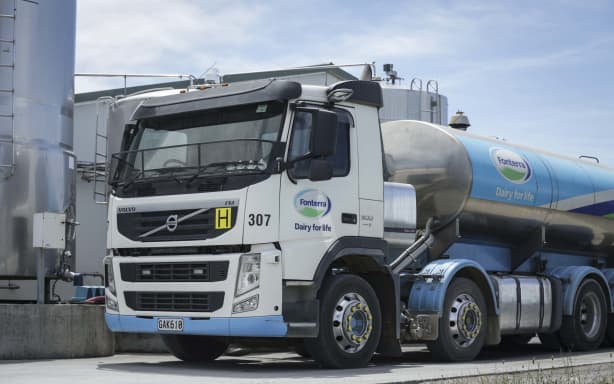
North and South Canterbury have the most significant typical cow herd sizes and equipping rates in the nation.
RNZ/ Rebekah Parsons-King
The business encouraged any ecological results were thought about to be “no more than minor”
Milk discarding would likewise have “positive effects” by including additional capability for surplus milk and “allow beneficial re-use of nutrients and organic matter”adding to soil fertility and supporting pasture and crop development, the application stated.
The variations followed the local council’s goals and policies, consisting of the Canterbury Land and Water Regional Plan, and neither public nor restricted notice of the authorization variations were needed, Fonterra argued.
Plea for local council to turn down Fonterra application
The Environmental Law Initiative (ELI) contacted the local council to decline the application.
Senior scientist Anna Sintenie stated the group was worried by a “vast” modification in activity from the initial permissions and the scale of the proposition.
“We’re looking at beforehand discharging wastewater related to processing of trucks and plant facilities’ wash down. What’s been proposed here is a completely different substance of raw milk and the scale of that is huge,” she stated.
“Twenty-two million litres is more than four litres of milk for every person in New Zealand. That’s an extraordinary volume of food to waste, especially with so many households experiencing cost-of-living pressures.
“It likewise comes at a substantial ecological expense, consisting of greenhouse gas emissions, heavy freshwater usage and nutrient contamination.”
The council should require Fonterra to submit new consent applications, which had higher notification and analysis requirements than variations, Sintenie said.
“Fonterra is attempting to insert a significant discharge of raw milk into existing wastewater authorizations through a variation. In our view, that’s not appropriate. A discharge of this kind must need a complete, brand-new authorization application and correct public examination,” she said.
ELI was also concerned about regional council dairy conversion approvals that had green lit consents associated with tens of thousands of additional cows in the past year, Sintenie said.
“That raises a basic concern: why is the area continuing to broaden dairy production when Fonterra is looking for authorization to get rid of surplus milk since production is most likely to surpass its processing capability?”
The environmental footprint of 22.3 million litres of milk included about 20,000 tonnes of emissions, approximately 6.5 billion litres of freshwater (mostly for irrigation and stock water) as well as many billions of litres more to dilute nitrate pollution, she said.
Sintenie said the application also requested the definition of wastewater be amended to include raw milk.
“By looking for this, it would unlock to that taking place in these authorizations into the future. It’s worrying that it might set a genuine precedent about how we think of including this extremely important and nutrient-rich foodstuff into wastewater,” she said.
Council’s role to determine if proposed changes under scope of existing consents
Canterbury regional council general manager of regulatory implementation Paul Hulse said the council became aware of Fonterra’s processing constraints in late September.
He said the council “do not and can not take service restraints into account” when assessing consent applications.
Hulse said it was not for the council to say whether the application should have been lodged as new consent rather than a variation.
“Fonterra is entitled to send the applications in the kind it thinks about proper. Our function as regulator is to figure out whether the proposed modifications fall within the scope of the existing approvals,” he said.
Asked what effect large amounts of raw milk could have on the environment, Hulse said the council’s water and land science team would “help permissions organizers in assessing an evaluation of ecological results for the proposed activity”.
Federated Farmers national dairy chair Karl Dean said he was not aware of similar attempts to allow milk dumping but welcomed the move, calling it “great, sensible service practice”.
He said there were a number of scenarios that could require milk to be disposed of, such as following an earthquake.
“It referred ensuring the proper systems and run the risk of mitigations remain in location so that if something bad did occur, the choices exist – even if they never ever get utilized – that those choices are offered,” he said.
“I believe what this highlights to me in doing some research study is it’s a bit worrying that a few of the other milk processors do not have that capability in their permissions.”
“Undoubtedly, I would anticipate the cooperative to be … wishing to use every drop of milk which I’m sure they will. I believe this is more of a case of making certain that excellent threat management remains in location so that ought to the outright worst take place, that there’s allowance to do something.”
Dean also supported Fonterra’s attempt to have the definition of wastewater changed to include raw milk, which he said would be beneficial for the entire industry.
Federated Farmers understood most South Island production constraints had already been mitigated, with significant upgrades to several sites in the South Island over the last year.
“As a farmer, I have not been affected this year the exact same method I was affected in 2015 when there was some problems, so I ‘d state that those mitigations have actually certainly worked,” he said.
In September, Fonterra announced it would spend $1 billion over three years on its South Island manufacturing network.
Greenpeace worried about environmental impacts
Greenpeace freshwater campaigner Rhiannon Mackie said dumping raw milk could have harmful environmental impacts.
“Canterbury has extremely permeable soil, which implies it’s truly simple for fluids to survive the soil and into water level like we see with the cow urine and artificial fertiliser that triggers nitrate contamination,” she said.
“In lakes and rivers in specific you can see boosts in harmful algal blossoms, which are currently a problem in Canterbury, and have a truly unfavorable effect on the health of the freshwater environments,” she said.
“Not just are New Zealanders funding the dairy market through the contamination of drinking water and lakes and rivers, we’re likewise paying substantial quantities of cash at the grocery store for dairy items and on the other hand Fonterra is speaking about discarding these raw milk items due to the fact that they’ve simply got a lot of it,” she said.
According to Fonterra’s “conservative evaluation circumstance”, the co-operative would send the bulk of the surplus milk (60 per cent) to the Clandeboye site, near Temuka – an indicative volume of 13,404m3 (13 million litres per season or 600,000 litres per day) – although it noted actual volumes could vary depending on milk supply, processing capacity and operational requirements.
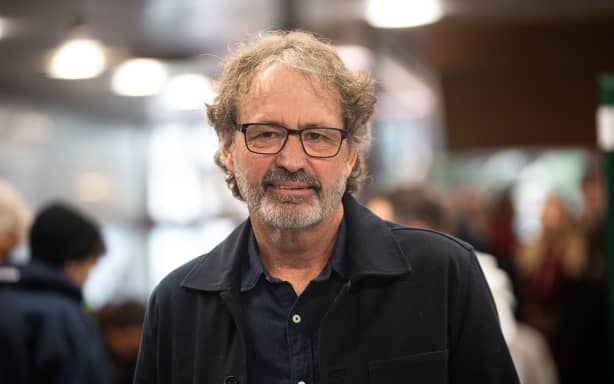
Dr Mike Joy dismisses Fonterra’s claim that the impacts of the discarding on the environment or to neighbours, locals and groundwater users would be “less than small”.
RNZ / Baz Macdonald
The next largest amount (37 percent of the total) would go to Darfield in the Selwyn district – 500,000 litres per day – while three per cent (25,000 litres per day) would be disposed of at Studholme near Waimate.
A recent Journal of Dairy Research paper quantified dairy food loss in New Zealand for the first time, finding the industry routinely lost 1.8 per cent of dairy food on farm and 5.5 per cent at the processor.
The study said the loss was “not a substantial concern” but equated to the annual milk production of approximately 86,000 cows on farm and 264,000 cows at the processor.
Victoria University research fellow Dr Mike Joy said the even the routine dairy losses had a big impact.
“You can call that small if you like, however that’s comparable to 350,000 cows worth of milk that’s simply disposed of. To me, that’s criminal, that’s not small, that’s an enormous effect,” he said.
Research led by Joy in 2022 concluded each litre of milk produced required up to 11,110 litres of water to dilute nitrogen leached from Canterbury dairy farms.
He dismissed Fonterra’s stance the effects of the dumping on the environment or to neighbours, residents and groundwater users would be “less than small”.
“Every application declares the effects are less than small however the cumulative results of an entire stack of less than minors is significant,” he stated.
Discover more from PMN S.P.O.R.T.S - A PRIME MEDIA NETWORK BRAND
Subscribe to get the latest posts sent to your email.







