Home Blog Page 95

Stonehenge’s Altar Stone Still Has No Home, Geologists Say

0

news

A brand-new analysis by University of South Wales Professor Duncan Pirrie and his coworkers damages the leading theory that the 6-ton piece of sandstone originated from northeastern Scotland, though the geologists stop brief of ruling it out completely.

science news The Altar Stone lies flat on the ground, sunk into the grass beneath the collapsed upright of the Great Trilithon and its lintel. Image credit: Nick Pearce, Aberystwyth University.The Altar Stone lies flat on the ground, sunk into the lawn below the collapsed upright of the Great Trilithon and its lintel. Image credit: Nick Pearce, Aberystwyth University.

The Altar Stone, an approximately 4.9-m piece weighing an approximated 6 heaps, lies primarily buried below 2 fallen sarsen stones at the center of the monolith.

For years it was believed to have actually originated from West Wales, like the majority of the smaller sized bluestones. In 2020, geologists revealed this was incorrect.

In 2024, a group led by Curtin University scientist Anthony Clarke, utilizing the ages of small mineral grains in pieces of the stone, concluded it originated from the Orcadian Basin of northeastern Scotland, a journey of some 700 km or more.

According to Professor Pirrie and co-authors, the photo is far less settled.

They do not challenge the earlier dating work, which indicates a Laurentian origin, indicating ancient crust connected with the Scottish Highlands, for the heavy minerals in the stone. Age information alone, they argue, are not enough.

“This is the most detailed geological examination of the Altar Stone ever carried out,” Professor Pirrie stated.

“By integrating a large range of analytical strategies, we have actually constructed the clearest photo yet of the stone’s structure and evaluated the leading theories about its origins.”

“So far, none of the places taken a look at have the very same set of qualities as the Altar Stone.”

“That informs us the search is not over, however we are now far much better geared up to concentrate on the locations probably to yield a response.”

Due To The Fact That the Altar Stone itself can not be tested, the scientists worked from 8 museum pieces with confidence connected to it, in addition to portable X-ray measurements of the 3 little spots of the stone that are exposed at Stonehenge.

The stone includes an unique scatter of baryte, a barium mineral that seals the sandstone’s grains, which offers the stone uncommonly high barium readings.

It likewise holds chrome spinel, a heavy mineral that is limited in Old Red Sandstone from much of the Orcadian Basin, consisting of Orkney, Caithness, the Moray Firth and Shetland.

The stone’s mixed-layer illite/smectite clay has about 20% expandable layers, an indication it has actually not been deeply buried or heated up. Rocks in Caithness and Orkney reveal worths listed below 10%, which would omit those locations.

The stone likewise consists of tosudite, an uncommon clay mineral, and reveals no indication of the low-grade metamorphism discovered in the Southern Uplands of Scotland, which rules the area out.

The stone’s ripple-laminated structure follows deposition by streaming water, which its calcite cement formed throughout burial instead of near the surface area.

Other prospects, West Wales and the broader Anglo-Welsh Basin, were omitted previously.

The Midland Valley of Scotland is eliminated by its abundance of rock pieces.

Carboniferous sandstones from southern and main Britain are a poorer isotopic match than the Old Red Sandstone, although the Old Red Sandstone’s isotope record is insufficient since strontium information are missing out on.

“For practically a century, the dominating view was that the Altar Stone originated from west Wales,” stated Aberystwyth University’s Professor Richard Bevins.

“Our previous research study reversed that presumption and pointed rather to Scotland as the most likely source.”

“This newest research study substantially fine-tunes the search by determining the particular geological attributes we require to search for, enabling future examinations to be targeted better.”

“With each brand-new piece of proof, we move more detailed to fixing among Stonehenge’s most long-lasting secrets.”

“In a geological investigator story such as this, dismissing prospective source locations is simply as crucial as determining brand-new ones,” included Professor Nick Pearce, likewise from Aberystwyth University.

“Every place got rid of narrows the search and brings us closer to finding where the Altar Stone came from.”

“The stone is special amongst those at Stonehenge, and tracing its source would offer important brand-new insights into its exceptional journey to Salisbury Plain countless years earlier.”

The research study was released today in the Journal of the Geological Society

_____

Duncan Pirrie et al2026. Searching for the origin of the Stonehenge Altar Stone: brand-new sedimentological, petrographical, mineralogical, geochemical and isotopic restrictions. Journal of the Geological Society 183; doi: 10.1144/ jgs2026-090

Read More

Edmonton police hunt for suspect in copper wire thefts

0
showbiz copper wire theft suspect
Chad Brochu, 43, is wanted on warrants for break and enter with intent to commit and breach of probation. Photo by Edmonton Police Service /Supplied
Article content

Edmonton police have turned to the public in hopes of tracking down a suspected copper wire thief.

Sign In or Create an Account

or

Article content

Between January 2025 and February 2026, Edmonton police investigated four copper wire thefts, according to a Thursday news release. During two break-ins at telecommunications tower sites, copper wire was stripped and “critical infrastructure” was damaged. In addition, two homes under construction were broken into and copper wiring was ripped out.

Article content

Article content

Article content

These incidents left more than $80,000 in damages and stolen property, investigators estimate.

Article content

By signing up you consent to receive the above newsletter from Postmedia Network Inc.

Article content

Police are now hunting for a suspect in the break-ins. Chad Brochu, 43, is wanted on warrants for break-and-enter with intent to commit and breach of probation. He is described as six-foot-three, 170 pounds, with a medium build, brown hair and brown eyes, and is known to wear glasses.

Article content

Anyone with information on Brochu’s whereabouts is asked to contact the Edmonton Police Service at 780-423-4567 or #377 from a mobile phone. Residents are warned not to approach Brochu. 

Article content

So far this year, Edmonton police have recorded 424 reports of copper wire theft in the city and have made 40 related arrests, police said in the release.

Article content

Article content

Bookmark our website and support our journalism:Don’t miss the news you need to know — add EdmontonJournal.com and EdmontonSun.com to your bookmarks and sign up for our newsletters here.

Article content

You can also support our journalism by becoming a digital subscriber. Subscribers gain unlimited access to The Edmonton Journal, Edmonton Sun, National Post and 13 other Canadian news sites. Support us by subscribing today: The Edmonton Journal | The Edmonton Sun.

Article content

Call for probe into HDC ‘fees’ | Local News | trinidadexpress.com

0

Minister of Homeland Security Roger Alexander is calling for an investigation into previous practices at the Housing Development Corporation (HDC) after several constituents complained that they were required to pay hundreds of dollars in fees before being approved for a home.

Alexander, the Member of Parliament for Tunapuna, told the Express that constituents had visited his office with receipts dating back to 2024, showing payments of $700 for a “search fee” and an additional $120 for a “processing fee”.

He said the payments, totalling $820 per applicant, were reportedly made before the individuals were informed whether their housing applications had been approved or whether they would be allocated a home.

Describing the situation as peculiar and suspicious, Alexander questioned the rationale for requiring applicants to pay such fees without any guarantee of receiving a home.

He said the complaints were particularly concerning because they had come from several constituents rather than a single individual, raising questions about whether the practice was widespread.

Alexander stressed that the circumstances warranted further scrutiny to determine the legitimacy of the charges, the purpose for which the money was collected and whether the fees formed part of the HDC’s approved procedures.

The minister said he intended to raise the matter with Housing Minister David Lee to seek clarification and determine whether an investigation was necessary.

He also urged members of the public to exercise caution when making payments connected to housing applications, warning that individuals desperate to secure affordable homes could become easy targets for unscrupulous operators.

Alexander said prospective homeowners should ask questions, verify the legitimacy of any charges and ensure that payments were being made through authorised channels.

He pointed to previous instances in which unsuspecting citizens had allegedly been defrauded of substantial sums by individuals promising to secure HDC homes in exchange for money.

The minister warned that the growing use of online platforms had created additional opportunities for fraudsters to exploit vulnerable people.

He expressed particular concern about the potential misuse of artificial intelligence (AI) to make fraudulent schemes appear more convincing, including through deceptive online communications and impersonation.

Alexander urged citizens to remain vigilant, especially when approached by individuals claiming to have influence over housing allocations or offering to fast-track applications in exchange for payments.

The Express sent questions to both Housing Minister David Lee and HDC chairman Feeroz Khan seeking clarification on the reported fees and whether they were authorised charges.

However, there was no immediate response.

PAMO University Joins Oxonia University Network at Oxford Ceremony

0

PAMO University of Medical Sciences, Rivers State, has been formally admitted into the Oxonia University Network, an international alliance of higher education institutions, at a ceremony held at the Saïd Business School, University of Oxford, United Kingdom.

The ceremony took place during a high-level programme on Leadership and Artificial Intelligence (AI) in Higher Education, bringing together academic leaders and representatives of universities from different parts of the world.

Professor Adaeze Chidinma Oreh represented PAMO University of Medical Sciences at the event on behalf of the institution’s Board of Trustees.

With its admission, PAMO University joins a growing international network comprising more than 153 universities across 41 countries, including institutions in Africa, Asia, Europe, the Middle East and the Americas.

Established in 2013, the Oxonia University Network began with 16 member institutions across 14 countries. It has since expanded into a global academic alliance focused on international cooperation, academic entrepreneurship, research development and the practical application of innovation to societal challenges.

The inclusion of PAMO University is expected to strengthen the network’s expertise in medical education, healthcare research and health sciences training, while creating opportunities for international academic partnerships and knowledge exchange.

The Oxford gathering also witnessed a leadership transition within the network, as Professor Abdullahi Yusufu Ribadu, Executive Secretary of the National Universities Commission (NUC), formally assumed the presidency from the outgoing president, Professor Abubakar Rasheed.

In his inaugural address, Professor Ribadu outlined his vision for the network’s next decade, highlighting the need to integrate artificial intelligence into university teaching, administration and medical research.

He stressed the importance of strengthening international research partnerships and promoting the responsible adoption of emerging technologies in higher education.

Professor Ribadu described the admission of specialised institutions such as PAMO University of Medical Sciences as an indication of the growing relevance of international academic collaboration.

He noted that as universities respond to rapid technological developments and emerging healthcare challenges, expanding research capacity and adopting responsible AI-driven solutions would remain critical to the future of higher education.

Discussions at the Saïd Business School also focused on the use of specialised digital platforms to promote joint research initiatives, faculty exchange programmes and the development of effective AI policy frameworks across member institutions.

PAMO University’s admission is expected to open new opportunities for collaborative medical research, healthcare training and international knowledge-sharing among academics and researchers within the network.

The development comes as the Oxonia University Network considers a review of its governance structure following more than a decade of expansion.

The admission of PAMO University further strengthens the network’s commitment to building inclusive international partnerships that advance higher education, innovation and global health development.

Fix up towering robots while battle rages outside in Bay 12: Mech Repair, a first-person job sim with some handsome heavy duty analog tech

0

The most important thing to know about Bay 12: Mech Repair is that these are mechs of the MechWarrior or possibly Patlabor school – that is, basically WW2 tanks on hydraulic legs, with cockpits full of switches and wireframe displays. Their bodies are assemblages of pistons and reactors. They are not biomechs like the ones in Evangelion. An Evangelion Repair game would be… different. Less industrial, more Oedipal. You would dread removing the smallest piece of housing.

Watch on YouTube

Which isn’t to say that Bay 12: Mech Repair represents life on Easy Street, exactly. There’s a big war happening outside, its fortunes palpable in the minced leg joints and pocked torsos of the war-bots lowered into your hangar. You’re also fed details about the lives of pilots when you accept a work order. Lieutenant Iona Vale of the 3rd Recon Company says there’s “left leg hesitation after extended operation”, especially at higher temperatures. That sure sounds like a thing that could get Lieutenant Iona Vale killed.

It’s not clear whether you can diagnose faults incorrectly, and shape the progress of the conflict, but the context brings extra emotional charge to what might otherwise be a cosy process of glueing together very expensive Air-Fix models, for all the sense of scale.

Bay 12: Mech Repair follows a familiar flow, as job sims go. Banged-up Iron Giants arrive in a steady procession. You figure out what’s wrong with them based on scans, pilot reports, and so forth. Then you get out there with a welder, drill and spanner to make it right. Busted parts can be salvaged for scrap for custom components. Completed work orders net you credits that must be divided between restocking your inventory and buying new tools.

You also have the option of clearing away rust and applying a new paintjob. I’m fascinated to know if this has any real impact on either the story or your fortunes, because I guarantee that I am going to spend far more time obsessing over dazzle camouflage than giving the ol’ actuators a haircut.

Read more on Steam. The devs, Crimson Herring Studios, are them wot did Sovereign Syndicate, an apparently decent Victorian fantasy RPG that we never found time to review. Look, I am not made of thumbs and eyeballs. As for the daunting possibility of an Evangelion Fixing Sim, the recently announced Valkyrie Iteration gets into some of the squirming detail, there.

WI looking to punctuate end of 2026 with exclamation mark

0

West Indies will be aiming to put the finishing touches on a memorable year in Test cricket when they face Bangladesh in the second and final Test at the Sylhet International Cricket Stadium, beginning today, with head coach Daren Sammy eager to secure a 2-0 series victory.

The Caribbean side head into the contest with a 1-0 advantage following their commanding eight-wicket win in the opening Test in Mirpur, Dhaka, and have already guaranteed a significant milestone, becoming assured of finishing a calendar year without losing a Test series for the first time since 1994.

But Sammy wants his players to go a step further and complete the sweep against a Bangladesh side he expects to respond strongly on home soil.

“We came here to win. We wanted to come here 2-0 and we have put ourselves in a position to do that,” Sammy said ahead of the contest.

“Knowing Bangladesh, knowing Phil (Simmons), the way he operates, he’s going to come out for blood. We don’t expect it to be anything easy, but the preparation we’ve put in, we know we could counteract and come out victorious.”

The West Indies squad utilised yesterday as a rest and recovery day ahead of the series finale, with the team looking to carry the confidence and momentum from their performance in Dhaka into the final assignment of their World Test Championship campaign.

A victory would provide an emphatic conclusion to a Test cycle which Sammy acknowledged had required considerable work to establish the right balance, personnel and roles within the team.

Difficult introduction

The head coach reflected on a difficult introduction to the job, with challenging assignments against Australia at home, India away and New Zealand in New Zealand, but believes the progress made over the past year is beginning to produce results.

“When I took over, the vision we had and the goals we had as a Test team, I knew it would have taken some time,” he said. “Obviously, when you go into an environment, you first have to understand what the environment is, how you’re going to change it and the things that you’ll need to do in order to get results.

“The first year we were finding the right balance in terms of players and roles allotted to them. We’ve settled in quite nicely.”

Sammy highlighted the stability at the top of the batting order, identifying Brandon King and John Campbell as a key component of the team’s development.

“They’ve probably been our best opening pair in a long time,” he said, while also pointing to the adjustments made to the batting order, including Shai Hope’s move to number four and the changing responsibilities of Justin Greaves and captain Roston Chase.

Sammy credited batting coach Floyd Reifer and the preparation undertaken over several years for the improvement, noting that the batters showed greater composure and intent against Bangladesh’s spinners. “Our spinners outbowled their spinners and our batsmen responded to playing spin better than theirs,” Sammy said.

Different challenge

West Indies, however, are anticipating a different challenge in Sylhet, with Sammy indicating that the surface could influence the composition of the final XI.

The coach said there appeared to be more grass on the pitch than at Mirpur, although he wanted to assess the surface again before making a final decision on the playing combination.

Experienced fast bowler Kemar Roach, who was left out of the opening Test in favour of an additional spin option, is in contention to return if the conditions offer greater assistance to the seamers.

Sammy explained that the visitors had deliberately maintained a balanced squad because of uncertainty over the type of surface Bangladesh would prepare. The decision to leave Roach out worked in Dhaka, where Warrican and Chase enjoyed considerable success, but the coach is prepared to adjust if the Sylhet conditions demand it.

The coach also praised his players for remaining committed and focused despite the wider challenges confronting West Indies cricket, saying their willingness to prepare and perform demonstrated the dedication within the group. He believes the opportunity to finish the year without a series defeat, improve their standing in the Test rankings and close the World Test Championship campaign with another victory represents an important step forward.

“The last step is to win this Test match and finish 2-0 like the skipper said to the guys that would be a good Christmas present for us,” Sammy said.

Internet Users Share Thoughts After YK Osiris’ Father-Son Bonding Video Sparks Mixed Reactions (VIDEO)

0

YK Osiris is very open on social media. From sharing his cooking journey to his boxing workouts, the singer is not shy when it comes to showing his followers what he’s up to. When he’s not doing that, he always makes sure to share sweet moments with his baby boys.

Earlier this week, YK took to his Instagram Story to share photos of himself alongside his son Amiri, whom he shares with ‘Love & Hip Hop’ star Stassia Thomas.

The singer and his 4-year-old son shared some cute photos showing off their outfits. However, it wasn’t until later in the week that YK found himself at the center of an online conversation after sharing another moment with his son.

RELATED: Social Media Reacts After Deshae Frost Defeats YK Osiris By TKO Following Heated Back-And-Forth (WATCH)

YK Osiris Shares Sweet Moment With His Son While On Daddy Duties

On Thursday, YK Osiris took to his Instagram Story to show how daddy duties were going this week. In the video, the singer is seen lying down while rubbing his son’s feet, as his baby boy appears to record the moment.

While the video was going, YK laughed as he rubbed his baby boy’s feet, questioning why his son always had him doing this. He captioned the video, “He told me rub his feet lol 😂 this man lol.”

YK Osiris Responds To Criticism Over Video With His Son

As the video of the singer and his son circulated on social media, YK Osiris later took to his Instagram Story to address the situation. The singer appeared confused by the criticism, questioning why people had an issue with him rubbing his son’s feet.

He wrote, “Mann lol yall crazy lol 😂 my son can’t get his feet rubbed lol 😂😂😂 insane lol… Yall minds are so sick lol these days.”

YK Osiris made it clear that he saw nothing wrong with the moment and called out those who misinterpreted it.

Social Media Reacts

Folks across social media platforms quickly joined the chat as they reacted to YK Osiris’s video. While some defended the sweet father-son moment, sharing their own similar experiences. Others argued that certain moments should be kept off social media.

Instagram user @v12rifa wrote, “I rub my son feet n bck n head & my ba better be doin it too. He get treated like a prince round here nun less.”

Instagram user @debbdadolll added, “Awee 😍😂 my mom rub my feet when ever we worked together n I rubbed hers think that’s love 💕🙏🏾”

While Instagram user @quenshae_ wrote, “a perverted thought should be a crime honestly like is yall coo?”

Instagram user @n.a.a.y._ wrote, “The recording is weird lmao🤣 rub that baby feet off the internet.”

Instagram user @amgmargiela61 added, “It’s not about you rubbing his feet now the son gone think it’s ok for MON to rub his feet no suh😒😭”

While Instagram user @ac_da_credit_guru wrote, “Everything is not for the Internet bro. Keep portions of your life private and you won’t have to worry about being criticized.”

Instagram user @isthatdolly_ wrote, “ppl really make anything s*xual its getting weird”

Instagram user @blkneducated15 added, “Ppl who nvr had a dad in their lives think this is weird. He is literally taking care of his child”

While Instagram user @london.arielle_ wrote, “They don’t know how it feels to have A dad so they use their ignorance to make it comes off ‘sexual’ 💀 😒 but I thought this was so cute and sweet 🫶🏾 😍”

RELATED: Whew! Social Media Reacts As YK Osiris Goes Off On Deshae Frost Ahead Of Boxing Match (VIDEO)

What Do You Think Roomies?

The Queen of Country: Dolly Parton’s life in pictures

0
Dolly Parton, the country music star who rose from grinding poverty in Tennessee to become a rhinestone-studded cultural icon with hits like Jolene and 9 to 5, has died at 80, her family said on Wednesday.

celebrities Black-and-white photo of a performer with a large hairstyle playing an acoustic guitar and singing into a microphone on stage.
Dolly Parton performing in 1974. Source: Getty / Michael Ochs Archives
celebrities In a black-and-white photo, Dolly Parton speaks into a microphone. Johnny Cash and another man are standing next to her.
Dolly Parton with Johnny Cash (left) and Ronnie Milsap. Hosting a show at Nashville’s Grand Ole Opry, Cash introduced a 13-year-old Parton as “a little girl here from up in East Tennessee”. Source: Getty / Bettmann Archive

Dolly Rebecca Parton was born on 19 January 1946 in Sevierville, Tennessee, the fourth of 12 children who grew up dirt-poor in the family’s small shack in the Great Smoky Mountains.

celebrities Black-and-white portrait of two people seated side by side, looking off-camera, with distinctive voluminous hairstyles and patterned clothing.
Parton’s work with collaborator and co-producer Porter Wagoner transformed her sound, launching her career. Source: Getty / Michael Ochs Archives

News that makes sense

Your trusted source for staying up-to-date with the world around you. Get free daily news updates and analysis, straight to your inbox.

celebrities Black-and-white photo of a performer with a large hairstyle playing an acoustic guitar and singing into a microphone on stage.
With time, Parton’s relationship with Wagoner would fray, ending in a 1979 legal battle over royalties. Source: Getty / Michael Ochs Archives

Parton was more than a singer — she wrote 3,000 songs, acted in major Hollywood films and donated millions of dollars to charities in her home state and beyond.

celebrities A smiling blonde woman wearing a white jumpsuit stands behind a microphone. She has a guitar on a strap across her body.
Dolly Parton’s stage persona — of a sparkling, peroxide blonde bombshell — was carefully crafted by Parton herself as part of a wildly successful business strategy. Source: Getty / Richard E Aaron

She was also an accomplished businesswoman, with her interests spanning from her popular Dollywood theme park to cosmetics, pet apparel, baking mixes and even a truck stop.

celebrities Person standing at a microphone with an acoustic guitar, wearing a light-coloured embellished outfit during a live stage performance.
Dolly Parton maintained a roster of voluminous wigs and rhinestone-covered jumpsuits. Source: Getty / David Redfern
celebrities Black-and-white stage photo of a performer in a long embellished gown, standing alone under a spotlight against a dark background.
As a performer, Dolly Parton was a mixture of Southern charm, humour and glamour. But fans also considered her a feminist role model for holding the reins of her own career in an entertainment world dominated by men. Source: Getty / Richard McCaffrey

During a prolific career that spanned six decades, Parton penned hits such as Jolene, Coat of Many Colours and the iconic ballad I Will Always Love You, which became an international success for Whitney Houston.

celebrities Dolly Parton standing beside a microphone on a dark stage, wearing a light-coloured ruffled outfit with large hoop earrings under stage lighting.
Parton famously wrote two of her most famous country standards, Jolene and I Will Always Love You, on the same day. Source: Getty / Richard E Aaron
celebrities Dolly Parton holding a handheld microphone on stage under dramatic blue and purple lighting, wearing a red jacket over a dark outfit during a live performance.
By the late 1970s, Parton had transitioned to a more pop music sound, a contentious move at the time. Source: Getty / Paul Natkin

Never one to downplay her striking looks, Parton essentially wrote the book on how a woman can rule the airwaves in a male-dominated industry, with songs covered by everyone from Shania Twain to Sinead O’Connor.

celebrities Two people, a younger woman and an older man, dance while holding microphones and smiling.
Parton recorded arguably her most famous duet, Islands in the Stream, with Kenny Rogers in 1983. Source: AAP / AP / Doug Pizac
celebrities Two people seated side by side in an indoor event or production space, smiling and looking toward each other. One person with light blond hair wears a patterned zip-up top and rests a hand on the other person's arm. The other person wears a white shirt and black leather vest. Metal truss structures and orange equipment are visible in the background.
Dolly Parton’s friendship with Kenny Rogers would last until his death in 2020. Source: Getty / Rick Diamond

The US singer-songwriter, actress, businesswoman and philanthropist didn’t seem to mind being mistaken for a ditzy blonde all too eager to play up her looks, after growing up poor in rural Tennessee.

celebrities Two women - Dolly Parton and Miley Cyrus - wearing a white dress and old suit respectively, sing together.
Parton was godmother to singer Miley Cyrus. The pair performed Jolene at the 61st annual Grammy Awards in 2019. Source: AAP / AP / Matt Sayles
celebrities Dolly Parton, wearing a black dress, speaks to two children.
Dolly Parton launched the Imagination Library, a children’s literacy scheme, as part of her Dollywood theme park in Tennessee. Source: AAP / Rui Vieira

At the height of her fame, she reached number one on the pop charts, with songs like Islands in the Stream, and starred in Hollywood blockbusters 9 to 5, for which she sang the insuppressible title track, and Steel Magnolias.

celebrities Dolly Parton seated outdoors holding an acoustic guitar in a flower garden, with a rustic watermill building and water wheel visible in the background.
Dolly Parton’s Dollywood theme park (seen here in 1993) is still a major economic driver for the Southern Appalachian region. Source: Getty / Ron Davis
celebrities Dolly Parton, wearing a yellow jacket and sitting on a grey sofa, smiling.
Dolly Parton ran the bulk of her business operations from her office in Nashville, a site which was also used for the occasional photoshoot. Source: AAP / AP / John Russell

She was inducted into the Rock and Roll Hall of Fame in November 2022.

Parton initially turned down the honour, saying she felt she hadn’t earned it. She released a rock album, Rockstar, in 2023, which she called an attempt to justify the induction.

celebrities Dolly Parton in a brightly coloured sequined outfit walks onto an awards-show stage with both hands raised, as a television camera operator films nearby.
Dolly Parton was one of the most decorated musicians of all time, and a regular nominee at music awards shows across her long career. Source: AAP / AP / Matt Sayles
celebrities Dolly Parton performing on stage with an acoustic guitar and microphone, wearing a white and gold embellished outfit under purple stage lighting.
Dolly Parton was an extraordinarily prolific artist. In her career, she produced 49 studio albums, four collaborative albums, nine live albums, six soundtrack albums, one extended play and approximately 222 compilation albums globally. Source: Getty / NBCUniversal

Affording her the sort of honour given to major state figures, US President Donald Trump ordered flags across the country to be lowered for a week to mark what he called a “true loss for millions of people”.

celebrities Person holding a vinyl record album with a portrait of Dolly Parton on the cover, standing outdoors on a paved walkway with the record tucked under one arm.
Fans have mourned Dolly Parton’s passing near her star on the Hollywood Walk of Fame. Source: AAP / EPA / Chris Torres

— With Agence France-Presse.


For the latest from SBS News, download our app and subscribe to our newsletter.

How to balance governance and innovation in the agentic AI era

0

Agentic AI can transform business operations — but the risks must be managed to ensure success.

The conversation about agentic AI is shifting: Rather than focusing solely on what the technology can produce, IT leaders are now considering what they are prepared to let it do.

Unlike traditional AI assistants that primarily respond to user prompts, agentic AI systems can make decisions and execute actions autonomously across business processes. This creates opportunities to accelerate workflows and improve productivity but also introduces new challenges involving risk and organizational readiness.

The shift is already well under way. In a recent HCLTech survey, 87% of the participating enterprises reported using generative or agentic AI in IT operations, underscoring the growing importance of effective governance. These challenges were central to a recent HCLTech and Google Cloud roundtable on the business impact of agentic AI in which the participants explored what it takes to move from experimentation toward enterprise-wide adoption.

Agentic AI is showing promise across a wide range of business functions, including IT operations, software engineering, customer experience, HR, marketing, finance, and sustainability. Across these areas, intelligent agents can streamline complex workflows; automate routine tasks; and support faster, more informed decision-making.

Realizing potential

But realizing that potential requires more than deploying new technology. Successful implementations begin with identifying high-value use cases, establishing measurable key performance indicators (KPIs), and connecting AI initiatives to specific business outcomes.

Roundtable participants highlighted concerns about cost, ROI, and insufficient testing, reinforcing the importance of a measured approach to adoption. To manage these risks, organizations are typically starting with lower-risk business processes, demonstrating tangible value before expanding their use of autonomous agents as confidence and capabilities mature. Those concerns are reflected in HCLTech’s AI Impact Imperatives 2026 research, conducted by Omdia, which found that respondents expect approximately 43% of their major AI initiatives to fail.

Rethinking governance for autonomous systems

As AI moves from assisting employees to acting on their behalf, traditional approaches to governance and compliance may prove inadequate. Autonomous agents introduce operational and reputational risks that require organizations to reconsider how decisions are monitored, audited, and controlled.

Governance must be built into agentic AI initiatives from the outset rather than added after deployment. That includes establishing clear boundaries for autonomous agents and determining where human intervention remains necessary. Human oversight is particularly important in high-stakes areas such as financial transactions, regulatory compliance, cybersecurity, and decisions affecting customers or employees. The appropriate level of oversight should reflect the potential business impact and risk associated with an agent’s actions.

Clear accountability, transparent decision-making, and escalation mechanisms can help organizations balance greater autonomy with continued human control over critical decisions.

Preparing for new ways of working

Technology alone won’t determine whether agentic AI succeeds at enterprise scale. Organizational readiness is another major hurdle, requiring businesses to align data, governance, people, and processes around common objectives. Change management and AI literacy are particularly important. Employees across technical and nontechnical roles will need new skills to supervise agents, evaluate their decisions, and collaborate effectively with autonomous systems.

As agents become increasingly integrated into business operations, organizations will also need to reconsider how their performance is managed and measured. Over the next several years, enterprises may see the emergence of hybrid teams in which employees focus more heavily on strategic decisions and oversight while AI agents take on more operational responsibilities.

Achieving this vision will require organizations to rethink operating models and invest in workforce readiness alongside technology. Ultimately, the autonomous enterprise will be defined by how effectively AI agents are integrated into business operations and deliver measurable results, rather than simply by how many agents an organization deploys.

Learn more about how HCLTech and Google Cloud are helping enterprises navigate the transition to agentic AI.

HP’s next CEO loves confrontation

0

The new year will see a new CEO for HP, which after a nine-month search has named Emma Walmsley to lead the company from January 4, 2027.

Walmsley was previously CEO of drug company GSK, where she turned around its finances and spun off its consumer healthcare business into a new company, Haleon. She has a reputation for courting confrontation rather than yes-men in the boardroom. HP needs a shake-up as revenue from printing declines and AI-driven demand for components is forcing up PC prices.

She will take over from HP’s interim CEO Bruce Broussard, who stepped in in February when former CEO Enrique Lores left the company after more than 25 years to become president and CEO at PayPal. There’s a consolation prize for Broussard, who will become chair of HP’s board, succeeding Chip Bergh who remains a board member.

Although Walmsley has been on Microsoft’s board for seven years (she is stepping down in December), this is her first foray into leading a tech company. Her almost 16-year tenure at GSK included more than eight years as CEO, and earlier in her career, she spent 17 years at L’Oréal.

Bergh said that during the executive search, she stood out “for the strength of her leadership experience across multiple industries, the clarity of her strategic thinking and her ability to translate customer insights into new growth.” He particularly cited her people-first leadership approach.

Walmsley reiterated her commitment to the philosophy in a post on LinkedIn. “HP has an extraordinary innovation heritage, an inspiring purpose and an incredible opportunity ahead as AI reshapes technology and what customers need from it. I’m excited to build on those strengths and help translate innovation into impact,” she wrote. “Behind every innovation are the people who work to make someone’s day a little easier, their work more productive, their ideas possible. In an age of AI, I believe human leadership has never mattered more. It’s a privilege to be joining this team.”

Announcing Walmsley’s appointment Broussard said, “We need a leader who can build on our innovation heritage and strengths to boldly shape the company’s future. Emma is a proven CEO with a track record of leading organizations at scale and guiding them through significant change. She has the experience and skills to bring HP’s businesses, capabilities, and people together to capture the opportunities ahead as AI moves to the edge, transforming how we work and live in a more connected world.”

This article first appeared on Computerworld.

The superstar who could be the next US president, and his ‘brilliant and unstoppable’ Australian mum

0
“With Natalie.”

Those two words from Georgia senator Jon Ossoff was all it took for a firestorm to engulf Washington, DC, in August, with the US president’s relationship to loyal aide Natalie Harp not escaping scrutiny for weeks no matter how much Donald Trump and his White House aides savaged reporters for asking about it.

With his boyish good looks, intellect and eloquence, Ossoff, a former Australian citizen, has charmed the world.AP Photo/Brynn Anderson

It wasn’t the first time a surgical critique from Ossoff had ricocheted across the globe; in June, clips from his searing speech about Trump, corruption and American democracy at a downtown Atlanta rally went viral by both social and traditional media standards.

Seven months earlier, pundits had declared Ossoff – who, at 33 in 2021, was the youngest person elected to the Senate since 1980 – as the senator most likely to lose his seat. That his core campaign message was corruption and its impact on the economy was, according to the New York Times, why Ossoff’s decisive victory this week proved them wrong.

But it’s also about how he delivers his message.

Ossoff’s oratory, though some argue it’s overrated, is what’s drawn comparisons to former president Barack Obama.

His boyish good looks have netizens dubbing him “Hotticus Finch” due to his resemblance to Gregory Peck’s Atticus Finch in 1962’s To Kill a Mockingbird. Said netizens also feel Ossoff speaks their language; the Millennial politician, whose “extremely online” X (Twitter) feed was previously analysed by Politico, has been courting his generation-mates on social media since well before New York City mayor Zohran Mamdani made it fashionable.

Should the 39-year-old Democrat leverage the momentum of his successful midterm campaign into a successful run at the White House in 2028, he would be the youngest person in United States history to assume office.

Ossoff has said he has “zero interest” in running for president, and emphasised his intention to serve a full six-year term in the Senate.

That his previously held Australian citizenship “lapsed”, however, would be an ace up his sleeve should he backflip. While the US Constitution does not explicitly ban dual citizens from being president, candidates tied to another country often face accusations of divided loyalties or conflicts of interest.

So who is Jon Ossoff, and how likely is it that a United States president with Australian heritage is in our future? Here’s what to know.

Who is Jon Ossoff?

Raised in metropolitan Atlanta, Georgia’s largest and capital city, Ossoff has represented the state in the US Senate since 2021. The Democrat has retained his Senate seat after defeating Republican Mike Collins.

Ossoff, who was raised Jewish, studied at Georgetown University’s School of Foreign Service in Washington DC, after interning for civil rights icon and Democratic congressman John Lewis.

Ossoff’s oratory has drawn comparisons to former US president Barack Obama. The duo is pictured here at a campaign rally in Georgia in October.AP Photo/Brynn Anderson

He worked as a filmmaker in London before entering politics, producing documentaries about African politics and terror group ISIS, both of which aired on the BBC. He also investigated international corruption and war crimes, judicial corruption and sexual slavery.

Before his 2021 election, Ossoff unsuccessfully campaigned for a high-profile Georgia congressional seat in 2017, the same year he married obstetrician and gynaecologist Alisha Kramer after 12 years of dating. The couple shares two daughters.

In Congress, Ossoff has lobbied for affordable medicine and improved safety measures in the foster care system, and sought to defend civil rights and strong border security.

What were Ossoff’s results in the Georgia midterms race?

Ossoff was returned to Congress on a margin of almost 18 percentage points, comfortably defeating Collins.

He dominated the ballot in Atlanta and enjoyed strong returns in Columbus and Augusta, Georgia’s two other key urban centres. The Democrat took almost 80 per cent of the vote in Athens, the city that is home to the University of Georgia.

In his victory speech, Ossoff once again took aim at Trump, calling him a “failed lame duck president” to generous applause.

Ossoff’s victory, after all, came as part of a remarkable blue wave through Georgia, which also saw Keisha Lance Bottoms become the first Black woman elected as Georgia’s governor. All previous 83 governors of Georgia were white men.

Tanya Miller won the state’s attorney general poll, taking about 56 per cent of votes, as the Democrats enjoyed positive swings from voters of all genders and races in the state.

Does Ossoff have presidential aspirations?

Rumours of a presidential run in Ossoff’s future have only intensified following his thumping win at the midterms – helped by headlines such as “Jon Ossoff Suddenly Looks Even More Presidential” from the New York Times – despite Ossoff’s insistence he harbours no ambitions for the role.

Ossoff won midterm voters through a mandate that focused on the cost-of-living issues facing Americans. He tied the issue to the Trump administration’s economic failures, such as its tariffs and rising oil prices triggered by war in the Middle East.

Democrats expect that thread to play a significant role in the 2028 presidential race, especially if the Republican nominee is chosen from the deeply unpopular Trump administration. (Vice President JD Vance appears to already be turning on Trump).

What’s Ossoff’s connection to Australia?

Ossoff’s mother, Heather Fenton, was born and raised in Sydney. Her father hailed from Footscray in Melbourne, and her mother from Brisbane.

The business graduate and activist settled in Atlanta, Georgia, where she raised her only child with husband Richard Ossoff, a Harvard-educated attorney Fenton met after moving to the United States when she was 23.

Ossoff and his Australian-born mother Heather Fenton, in a photographed posted to Facebook in 2020.Jon Ossoff/Facebook

“Brilliant and unstoppable”, according to a post Ossoff shared to X for Mother’s Day, Fenton is a prominent political figure in her own right.

She co-founded New Power PAC, a nonpartisan organisation that aims to increase the number of women in public office in Georgia.

Like her son, Fenton is a prolific social media user. Facebook is her megaphone of choice, her profile littered with posts criticising Trump and celebrating her son’s career moves, and photos of the Sydney Opera House lit up for Australia Day’s Dawn Reflection ceremony or in solidarity with Ukraine. It’s also where Fenton revealed Only Murders in the Building star Alexandra Templer Waldon is her goddaughter.

Donation records published by nonprofit OpenSecrets show Atlanta-based Fenton is retired, and has generously supported a range of Democrat-aligned causes. This included one $US33,400 donation for the Hillary Victory Fund in 2016, and more than $US50,000 for her son’s various election campaigns over the past decade.

Though no longer a citizen, Ossoff has travelled to Australia several times.

When asked in July what Americans could take from Australians, Ossoff told a TMZ reporter: “Vegemite is a little bit of an acquired taste, but there is a laid-back culture in Australia. We get a little bit wound-up sometimes over here.”

Read more on the midterms:

daily news updates Daniel Lo SurdoDaniel Lo Surdo is a breaking news reporter for The Sydney Morning Herald. He previously helmed the national news live blog for The Sydney Morning Herald and The Age.Connect via email.

daily news updates Bronte GosslingBronte Gossling is a reporter for The Sydney Morning Herald, The Age, WAtoday and Brisbane Times.Connect via email.

What is a recession and are we in one? A bluffer’s guide

0
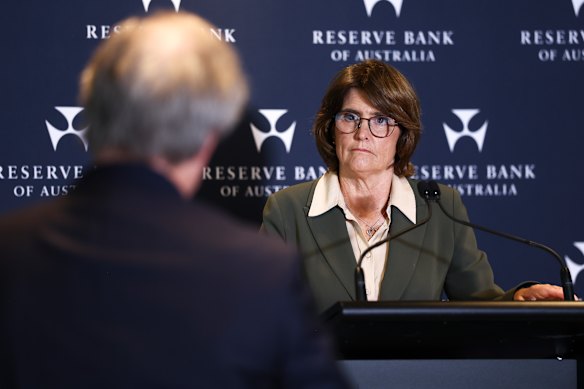
As Michele Bullock explained why the Reserve Bank had lifted interest rates for a fifth time this year on Tuesday afternoon, Australians hit Google.

Something the RBA governor said in response to reporters’ questions caught their ears and got them wondering.

“We are not looking to tip the economy into a recession if we can avoid it,” she said.

It was that word – recession – that caught Australians’ attention.

global news today Michele Bullock sparked a flurry of Google searches when she mentioned recession during her press conference.
Michele Bullock sparked a flurry of Google searches when she mentioned recession during her press conference.Dominic Lorrimer

Google Trends’ measure of searches for the word “recession” reached its highest level since 2020, when the nation went into an actual recession, and its third-highest on record.

There were also spikes in searches for answers to questions such as “what happens if Australia goes into recession”, “when was the last recession in Australia” and “what to do in a recession”.

All of this activity raises the question – what is a recession?

The two ways to tell you’re in a recession

There are two generally agreed-upon definitions.

The most common in this country is two consecutive quarters of negative economic growth. Since World War II, there have been eight of these types of recessions.

But there are problems with this definition.

Most famously, then treasurer Paul Keating declared “this is the recession that Australia had to have” in November 1990 after the just released September quarter national accounts showed the economy had contracted by 1.6 per cent following a 0.9 per cent drop in the June quarter.

global news today Then-treasurer Paul Keating talking about the recession we “had to have” in 1990.
Then-treasurer Paul Keating talking about the recession we “had to have” in 1990.Peter Morris

Two negative quarters equalled a recession.

But that negative quarter of growth in June has been erased over time as the bureau of statistics collected more information. Keating never had to make his famous declaration.

A small recession in 1977 only appeared after revisions by the bureau. At one point, a recession in 2000 was just a few million dollars away from appearing in the official statistical measure before later revisions confirmed the economy had avoided the global dotcom bust.

The two negative quarter growth definition obscures how not all recessions are equal.

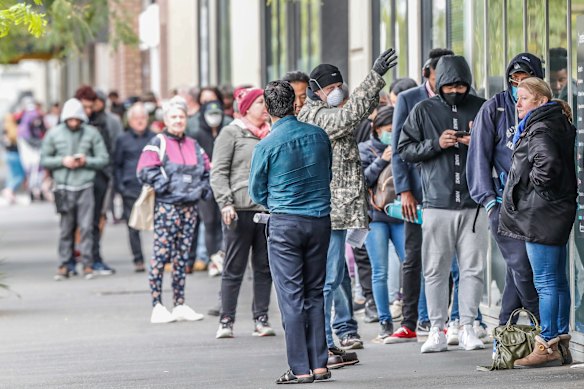
Australia’s most recent recession – at the start of the pandemic in 2020 – was missed by most people as governments thrust hundreds of billions of dollars into the nation’s collective wallets while the Reserve Bank printed hundreds of billions more and sliced official interest rates to 0.1 per cent.

This recession was effectively government policy as Scott Morrison and Josh Frydenberg shut the economy to prevent mass deaths at the hands of COVID.

Through the first six months of 2020, the economy contracted by 7 per cent. It was the steepest decline since the Great Depression in the 1930s.

global news today Queues outside Centrelink offices around Australia as businesses shuttered in March 2020.
Queues outside Centrelink offices around Australia as businesses shuttered in March 2020. Jason South

But it wasn’t accompanied by a surge in unemployment which would peak at 7.4 per cent. People weren’t sacked en masse nor saw their businesses collapse as in a “normal” recession. Most Australians ended up in a stronger financial position due to all those handouts and record low mortgage rates.

The 2020 recession is why some economists prefer using the jobless rate as an indicator of economic bad times.

It’s best illustrated by the “Sahm rule”, a rule-of-thumb created by American economist Claudia Sahm.

Under her definition, a country is on its way to recession if the jobless rate over a three-month period is half a percentage point higher than any other three-month period recorded during the preceding year.

In Australia, the jobless rate averaged 4.63 per cent between July and September. Between December and February, it averaged 4.17 per cent. That’s a rise of 0.46 percentage points, just short of the Sahm rule.

HSBC Australia chief economist Paul Bloxham noted this week that the Sahm rule was a clear warning of the economy’s weakness.

He said that, given the Reserve Bank’s effort to bring down inflation, “the risks are rising that Australia’s economy will have a harder landing – or even a recession”.

In the doledrums

global news today Saturday Morning Land Sale’, an engraving of a C.H. James land sale, 1885
Saturday Morning Land Sale’, an engraving of a C.H. James land sale, 1885State Library

Mass or long-term unemployment is a real concern for the Reserve Bank. In a country with enormous mortgages, the loss of a regular pay packet for a sizeable proportion of the population would create a spiral of economic troubles starting with the nation’s big four banks that stand or fall with the Australian property market.

The 1890s depression was centred on runaway property speculation in Melbourne. Of the 64 banks and credit union-like institutions that were operating in 1891, 54 had closed by mid-1893 (34 of them permanently).

One in 10 homes nationally, with a much higher ratio in Melbourne, were repossessed.

A recession definition is one thing. But, as Bullock noted this week, an economic slowdown or a blast of inflation has real-world consequences.

“The fact that we’ve had this massive shock has meant that we’re poorer, and that’s what people are feeling,” she noted.

It’s not just people feeling poorer. So are businesses.

A yet-to-be released survey by MYOB of 370 mid-sized businesses found their costs, including fuel and energy and insurance, had climbed by $6700 a month over the past year.

More than a quarter said their costs had lifted by at least $10,000 a month, with firms employing between 200 and 500 staff particularly hurting.

Just 1 per cent said their costs had not increased at all.

MYOB executive general manager (mid-market), Paul Voges, said almost half of surveyed firms had sunk money into efficiency measures or renegotiated with suppliers in a bid to put a lid on their higher costs.

Recession definitions

  1. Two quarters of negative economic growth
  2. The “Sahm rule” – average unemployment rate over a three-month period is half a percentage higher than any three-month period over the previous year
  3. America’s National Bureau of Economic Research determines a recession in the US. Its working definition is a “significant decline in economic activity”, which can occur over a shorter period of time or more than a year

“These actions won’t remove every pressure, but they highlight how businesses are adapting their operations in a more demanding cost environment while keeping improvement and growth firmly on the agenda,” he said.

Negotiating with suppliers for better deals is one way to reduce costs. Another is to sack staff, something that happens in recessions.

Job losses are starting to mount

There was a stark reminder of that this week with a slew of job losses announced.

Australian software company Canva said it would axe up to 22 per cent, or almost 1300, employees. Another AI company, Melbourne-based Heidi, revealed plans to shed 108 positions.

Petroleum producer Woodside is getting rid of at least 500 staff while there are major doubts over hundreds of positions with 188-year-old retail behemoth David Jones now in administration.

Those being let go confront a softening jobs market.

The Bureau of Statistics this week reported there were 325,000 job vacancies across the country in August. In the same month, there were 706,000 people actively searching for work. In other words, more than two people for every job opening.

Compare that to August 2022, after the economy had fully reopened from its COVID-induced slowdown. In that month, fewer than 499,000 people were officially unemployed with companies advertising 477,000 job vacancies.

Why it feels this bad but isn’t a recession

For all the talk of a recession, the economy continues to grow – albeit at a slower rate.

Neither the RBA nor the federal Treasury is forecasting the economy to shrink.

“We’re very alive to the pressures on growth, but neither institution is anticipating or I believe, as far as I’m aware, war-gaming the economy going backwards for a couple of quarters,” Treasurer Jim Chalmers noted.

One of the reasons for that is the AI construction boom that is contributing to the inflation pressures the Reserve Bank is countering with higher interest rates.

Figures from the Deloitte Access Economics this week showed the nation’s infrastructure pipeline has reached a record $1.4 trillion. It is being driven by AI data centres, and often the power sources needed to run them.

global news today An artist’s impression of part of stage one of Stockland’s $935 million data centre in Melbourne’s western suburbs.
An artist’s impression of part of stage one of Stockland’s $935 million data centre in Melbourne’s western suburbs. Stockland

Deloitte estimates the AI boom will be larger than the mining boom of the 2010s. But, unlike that boom which happened in outback Queensland and the north-west of WA, this is playing out within eyesight of the nation’s growing suburbs.

“This boom is happening close to our major cities, so data centres are competing directly with housing and infrastructure for workers and materials,” Deloitte director Stephen Smith said.

Oxford Economics’ director of global macro research, Ben May, argued this week that the circumstances that delivered recessions in the past – high oil prices, increases in interest rates, over-investment in a particular part of the economy – are eerily similar to the economic situation facing many nations today.

But he said it would take a collapse in the AI boom or a further escalation in the Iran war to really drive the globe into a deep recession.

“Compared with the 1970s and 1980s, economies are better positioned to weather shocks. Indeed, the resilience of the world economy to the events of the past couple of years is testament to this,” he said.

That view, of course, ignores that shocks are just that – shocks. For instance, no one expected the 2020 global recession unleashed by COVID.

The AI boom that is powering the US, Australia and many other nations could come apart. At this week’s US midterms, American voters supported more than 40 ballot initiatives to slow the data centre rollout.

More worryingly for the tech bros, these initiatives won bipartisan support.

In Butler County outside of Wichita in Kansas, Republican Rob Estes attracted 64 per cent of the vote. Seventy-one per cent of the county backed a data centre and battery storage system ban.

The new word that sums up the whole crisis

Back in Australia, Bullock’s deputy, Andrew Hauser, this week said the globe was in a “VUCA” period. VUCA stands for volatile, uncertain, complex and ambiguous with the world facing a “fusillade of shocks from tariffs, wars, geopolitical tensions, pandemics, and technological and environmental change”.

He warned this meant the chances were increasing of a central bank getting its policy settings incorrect.

“That means inflation is more likely to be pushed off target; economic forecasts are more likely to be wrong; and policy trade-offs get uglier,” he said.

People won’t need a Google search to discern what that all means. They’ll feel it as a recession.

Cut through the noise of federal politics with news, views and expert analysis. Subscribers can sign up to our weekly Inside Politics newsletter.

Qantas to raise airfares, cut flights as fuel costs rise by $1 billion

0
Qantas will raise airfares and trim domestic flights as its fuel costs jump by more than $1 billion, nine months after the conflict in the Middle East erupted.

Domestic capacity and route cuts are accelerating from 1 per cent in the first quarter of 2027 to 5 per cent in the second quarter, the airline said, but international flights capacity is expected to remain firm at 2 per cent across the same period.

Qantas is grappling with the effects of soaring fuel prices. James Brickwood

“ will continue to adjust fares and capacity in response to higher fuel costs,” the airline said in a market update ahead of its annual general meeting with shareholders.

The company’s fuel bill for the final six months of 2026 is now expected to be $3.75 billion, up from a previous forecast of $3.6 billion and $1.1 billion higher than for the same period last year.

Airlines have been struggling to contain the impact of fuel prices since the conflict broke out in February this year, setting off a surge in the price of crude and jet fuel.

As well as passing on higher costs to customers, they are putting smaller planes on routes, reduced frequency and cutting some routes altogether.

Qantas has continued to hedge fuel at about 85 per cent for fiscal year 2027.

Even with fare increases and capacity cuts announced, Qantas noted that “demand remains resilient as customers continue to prioritise travel”.

International demand for Qantas and Jetstar services “remains strong, supported by customers redirecting travel away from the Middle East”.

Jetstar’s international capacity will move from a 2 per cent reduction in capacity in the first quarter of 2027 to growing the same amount the following quarter, the airline predicts.

“In April, our first Project Sunrise aircraft arrives. And in October, we launch the first non-stop flight from Sydney to London.”

Qantas chief executive Vanessa Hudson

University of Sydney aviation professor Rico Merkert said the Qantas announcement is “less a sign of weakness than of discipline”.

“Qantas is prioritising yield and profitability over market-share growth, using capacity restraint and pricing power to manage higher fuel costs.”

“The airline has benefited from fuel hedging, which gives it more protection than many unhedged US carriers, but that benefit is not permanent,” said Merkert.

“As hedging contracts expire and are replaced at higher jet fuel price levels, airlines have limited options beyond controlling capacity and passing at least some of those costs on to consumers.”

“In that sense, what we are seeing is less a Qantas-specific issue and more a reflection of the economic realities facing the global airline industry.”

Rising fuel costs have, to date, not impacted the airline’s fleet refresh, including Project Sunrise the plan to offer direct point-to-point non-stop flights from Sydney to London, and Sydney to New York. Fuel costs typically account for about a quarter of an airline’s operating costs.

“While we manage these near-term pressures, we haven’t lost sight of the long term, and we remain firmly committed to our investment in fleet renewal,” chief executive Vanessa Hudson said.

“In April, our first Project Sunrise aircraft arrives,” she said. “And in October, we launch the first non-stop flight from Sydney to London.”

Routes via Singapore to London, and via Perth to Rome, have allowed Qantas to avoid the troubled Gulf region where airports and civilian infrastructure have been periodically attacked.

Domestic leisure demand remains strong. The airline said it was closely monitoring corporate and government travel, which it described as “stable”.

The airline’s total unit revenue from its domestic and international operations is expected to grow by 8 to 10 per cent in the first half of next year. The impact of capacity cuts from high fuel costs won’t be seen in the group’s results until the second half of 2027, reflecting “the cycling of fare and capacity actions taken in the prior corresponding period,” it said.

Guidance will be provided with the release of the airline’s first half results in February 2027.

The Business Briefing newsletter delivers major stories, exclusive coverage and expert opinion. Sign up to get it every weekday morning.

global news today Chris ZapponeChris Zappone is a senior reporter covering aviation and business. He is former digital foreign editor.Connect via X, Facebook or email.

Threat actor targets Indian fintechs on weekends when defenders aren’t watching

0

security

CERT-IN warns of ‘significant escalation’ in AI-powered attacks, some after victims tried to improve defences

India’s Computer Emergency Response Team has warned the nation’s financial services industry of a “significant escalation” in attacks by what it describes as an “AI-assisted financial threat actor” that has re-targeted victims after they flubbed remediation efforts.

CERT-IN first detected the attacks in October and issued advisory in which it warned digital lending platforms, fintech entities, payment service providers, and wallet operators that attackers were targeting internet-facing applications, exposed APIs and privileged endpoints. If the attackers found a way in, they tried to use payment APIs to steal money.

On Thursday, the CERT published an update in which it said it continues to hear of successful attacks, including from outfits that tried to remediate their systems after earlier incidents.

“The same entities have been deliberately re-targeted, including after incomplete remediation and attacks have been timed to coincide with holidays, weekends and other low-monitoring windows to delay detection and response,” the CERT warned.

CERT-IN has decided the attackers need a name and chose “CRAFTY FALCON.”

The security org has also revealed that the crew uses AI-enhanced tools including the ARTEX pen-testing tool, the Cairn attack search engine, and the CyberStrikeAI framework – all of which have been linked to users who appear to speak Chinese.

CRAFTY FALCON’s tactics see it go looking for internet-exposed environments used for testing or development, where it finds artefacts such as shared credentials, tokens, or network paths that help it move into production systems.

If it gets in, the crew re-writes victims’ applications so they do things like make unauthorized API calls. Victims’ defenses assume that only legitimate apps would call those APIs, so activity conducted by the re-written apps aren’t flagged as an attack.

Even if victims suspect an attack, they have a lot to cope with because CERT-IN says CRAFTY FALCON creates many “functionally identical variants refined in rapid succession; a pattern consistent with AI-generated code and iterative AI-assisted development.”

The crew also quickly exploits newly discovered vulnerabilities to keep its attacks fresh.

Once it gets a toehold, the criminal crew makes tiny payments of about $0.01 to test if its attacks work. If those transfers work, CRAFTY FALCON makes larger payments. When the target is a cryptocurrency exchange or virtual digital asset service provider, the crew steals wallet keys and empties cryptocurrency wallets.

Vendors of observability tools will be warming up their Indian sales teams today, because CERT-IN’s advice to Indian businesses includes improving their ability to log events, monitor for anomalies in real time, and send alerts. It also urged keeping test environments off the internet, and restricting access to cloud resources because CRAFTY FALCON is fond of using them to run its attacks.

CERT-IN also warns that the attacks are “active and escalating” and therefore worthy of 24×7 monitoring.

Interestingly, the CERT’s advisory mentions attacks on “entities” across banking, financial services, and insurance, but only names the kind of businesses mentioned above as having reported attacks.

The Register points this out because India is home to literally thousands of banks, many of them small operations that sometimes lack basic infosec protections. CRAFTY FALCON therefore has a target-rich environment in India should it choose to expand its activities. ®

DOJ Launches ‘Super Intelligence’ Task Force Because Apparently We’re Still Doing This

0

news

The U.S. Department of Justice announced the creation of the Super Intelligence (SI) Task Force (DOJ-SITF) on Thursday. The unit is tasked with making sure U.S. artificial intelligence technology is not compromised, or misused by foreign actors or fraudsters. The new task force will be led by Attorney General Todd Blanche underlings Stanley Woodward and Stephen Weiss, according to a press release, which is filled with the kinds of statements you’d expect to hear from Trumpy government officials.

Honestly, the release is kind of jarring to read at this late date. It serves as a reminder of President Donald Trump’s desperate attempt to rebrand AI as SI. Apparently we’re still doing that.

Attorney General Todd Blanche, the former personal attorney for the president, said that, “SI development will continue to be powered by American innovators.”

Blanche’s statement continued to use “SI” repeatedly. It all hits a little differently after the elections on Tuesday, where Democrats scored historic wins across the country. Dems won at least 54 of 100 seats in the Senate (Mississippi and Alaska haven’t been called yet) and at least 252 of 435 seats in the House (25 races haven’t been called yet).

There’s been a huge vibe shift, and it remains to be seen whether the tech oligarchs will continue to placate Trump in the same old ways. There’s no denying that they will need him if they want to continue to get massive government contracts. But when the Democratic House and Senate are seated in January, they are very likely to start investigations that could make complicity in Trump’s actions look like a poor business decision.

It was always about business for guys like OpenAI CEO Sam Altman and Anthropic CEO Dario Amodei. Working with Trump was a way to make sure they could get the best regulatory treatment (which in the Trump White House means no regulation at all). They didn’t really care if there was a Republican or Democrat sitting in the Oval Office.

technology news Dario Amodei, co-founded Anthropic, looks to Mark Zuckerberg, CEO of Meta Platforms, and U.S. President Donald Trump as Trump holds a press briefing with AI executives following a meeting on artificial intelligence outside the West Wing of the White House on September 29, 2026 in Washington, DC.
Dario Amodei, co-founder of Anthropic, looks to Mark Zuckerberg, CEO of Meta Platforms, and U.S. President Donald Trump as Trump holds a press briefing with AI executives following a meeting on artificial intelligence outside the West Wing of the White House on September 29, 2026 in Washington, DC. © Photo by Kevin Dietsch/Getty Images

Elon Musk can even be seen in a similar light. He was more than happy to shake hands and work with Democratic President Barack Obama as long as the subsidies and government contracts were helping out Tesla and SpaceX. Granted, he seems like a true believer in Trump’s fascist worldview, but Musk was always a businessman first—ready to crush anyone who might hinder his ability to become the world’s first trillionaire.

The second these guys don’t need Trump anymore, there’s no reason to call it superintelligence. For that matter, there’s no reason to call it Lake America or the Gulf of America or whatever else his broken brain spits out next.

There’s probably still plenty of money to squeeze out of that dying MAGA mind of his. But we can expect to see them playing along less and less as Trump’s fascist coalition crumbles.

Lawsuit Claims Student’s Google AI Use Turned Into ‘Life-Threatening Obsession’

0

news

A North Carolina couple is suing Google, claiming that the Gemini AI installed on a school-issued Chromebook laptop helped their 13-year-old daughter plan her suicide attempt.

“Unknown to her parents, Emma had spent the last several months in the thrall of Google’s AI chatbot, Gemini, which had coached Emma on how to commit suicide and plan her own funeral,” the lawsuit says, referring to a victim identified under the pseudonym Emma Doe. “Emma’s parents had no idea that she even had access to Gemini—or any chatbot—because Emma’s only access to Gemini was through the Chromebook she was required to use for school.”

The lawsuit says that the victim began using Gemini and Google’s Search-embedded AI features, AI Overviews and AI Mode, for school in the autumn of 2025. In just a handful of months, her interactions turned into “a life-threatening obsession,” the lawyers claim. By springtime, she was allegedly conversing with the chatbot almost around the clock.

“As her Gemini chats grew more frequent throughout January and February 2026, Gemini convinced Emma that she was afflicted by a battery of major psychological disorders, which ultimately led Emma to believe that suicide was the only way to escape her suffering,” the lawsuit states.

In a couple of interactions with Gemini, Emma allegedly seemed to acknowledge her situation, with the lawsuit claiming that she told the chatbot that she felt happy “3 months ago” and even asked how to stop her “addiction of asking ai random questions.”

Google’s AI features allegedly gave tips to Emma on how to end her life and even “coached” her to keep the truth of the situation from her family and friends. The products failed to trigger a crisis alert at any point, the parents claim. It was the school’s internet monitoring software that eventually triggered an alert, and her parents were notified in March.

“We are reviewing the claims in the lawsuit and we take this very seriously,” a Google spokesperson told Gizmodo.  “We’ve worked extensively with medical professionals and academic experts to build features that help young people find critical support and trusted resources when they need it. Our systems aim to prevent users from engaging in harmful conversations, and when people’s queries indicate they may be experiencing a crisis we show hotline information directly in Search to connect them with real-world support.”

According to Google, explicit content gets filtered out in Search results for students using Workspace for Education, and any highly sensitive queries in Search are provided with information from trustworthy sources. Google says the results adhere to content policies, and its crisis detection systems show hotline information when it finds that a user is contemplating self-harm. The company says it extensively monitors for attempts to jailbreak these safety guardrails. Google also claims that it provides age-appropriate AI literacy resources and prompts minors to double-check AI information.

“What happened to Emma was no accident,” the lawsuit claims. “The ground was laid many months before, thousands of miles away from Emma’s North Carolina home, where Google leaders concluded that they had a problem: the Silicon Valley titan was losing the battle for AI supremacy.”

Google had a rocky start to the AI game with a botched Gemini rollout in 2024. The tech giant upped its efforts in 2025 and released Gemini 3 in November of that year. The product was received so well by the internet that it even allegedly caused OpenAI to declare “code red.”

The lawsuit claims that Google forced its AI into its many products, which had already captured a strong user base over years of industry domination, thus helping push Google’s AI applications in front of a huge number of users. Google has indeed embedded AI into pretty much its entire product repertoire, especially its top product, Search. AI Mode and AI Overviews have steadily taken over the Google Search experience in the past two years, so much so that executives admitted that strong user growth in AI Mode combined with the lower ad monetization contributed to slowing Search ad revenue growth in the company’s latest quarter.

“Google could have publicly explained that every time a student used their Chromebook to run a Google search, Gemini-powered AI features could be triggered and draw them into unsafe conversations that endangered their safety and well-being,” the lawsuit claims. “Google intentionally chose not to do so.”

The integration of AI and Search separately caused quite the controversy earlier this week when the New York Times reported that a new Google initiative would ban students from accessing Search if their schools have banned access to its AI products. The report drew ire, especially from politicians like New York City Mayor Zohran Mamdani, who had recently announced that student-facing generative AI would be banned in the City’s public school system through eighth grade in response to growing demands from concerned parents. Google clarified that schools will be able to turn Gemini and Search on or off individually, but didn’t specify if an AI ban would effectively target AI Mode and AI Overviews while maintaining access to the core functions of Search.

The executives also “cut critical corners, sacrificing safety in favor of power and speed” while releasing the Gemini 3 Flash model, the lawsuit claims. The lawyers cite findings from nonprofit KORA to claim that Gemini 3 Flash scored significantly worse on safety than previous Gemini models. Emma’s symptoms allegedly began around the time Gemini 3 Flash was released.

Another recent risk assessment, this time by Common Sense Media, also gave Google’s Search AI functions an “unacceptable risk” rating for kids and teens. That report claims that both AI Mode and AI Overviews missed “clear signs of suicidal ideation.” Since the report’s release, Senators Richard Blumenthal and Josh Hawley have sent Google CEO Sundar Pichai a letter raising concerns over Google’s “aggressive push” of AI products to school-aged children.

“Google must be held to account for treating the lives of children as disposable in service of its bottom line,” the complaint concludes. The parents are asking for injunctive and monetary relief.

The lawsuit echoes similar claims brought against Google competitor OpenAI in a wrongful death lawsuit last year. In that lawsuit, a California couple claimed that ChatGPT assisted their 16-year-old son’s suicide, including by discouraging him from notifying his parents about his suicidal ideation and helping him write a suicide letter.

Evidence suggests that kids and teens are increasingly turning to AI chatbots for emotional support and mental health advice, a reliance that experts warn can turn dangerous.

Tech Rout Wipes Out $2.5 Trillion, With AI Investors Anticipating Heavier Scrutiny From Dems

0
The Nasdaq Composite fell 5.5%, or an estimated $2.5 trillion in market value, on Thursday. The index descended into correction territory after weak earnings reports in the AI sector and a blue tsunami in the 2026 midterm elections on Tuesday set off a tech stock rout, the Wall Street Journal reported. According to the Journal, shares of “Asian chip makers, Texas power producers, New Jersey compute providers, Silicon Valley software makers, contractors and data-center developers” all tumbled. Traders who had made highly leveraged bets, or wagered the pullback in AI stocks wouldn’t continue, got crushed. The paper reported the “Magnificent Seven” (Alphabet, Amazon, Apple, Meta, Microsoft, Nvidia, and Tesla) collectively lost around $1 trillion in value, while the PHLX Semiconductor index had its worst day since the depths of the global coronavirus pandemic.

Every sector in the S&P 500 finished in the red in Thursday’s selloff, the Journal added. The biggest AI hyperscalers (Alphabet, Amazon, and Microsoft) dodged the worst blows on Thursday, but SpaceX took a hit of more than 9% along with fellow Elon Musk-controlled firm Tesla. That’s likely related to promises of investigations from Democrats, whom the Republican-allied billionaire spent nearly $500 million this cycle trying to keep out of office.

This is the biggest Nasdaq single-day percentage drop since April 2025’s “Liberation Day,” according to Reuters, and it is the largest ever in dollar terms, according to the Journal. “Liberation Day” was when President Donald Trump announced sweeping tariffs on goods from around the globe, triggering months of economic chaos.

“It seems like the rug is getting pulled out from under it,” Meridian Equity Partners senior managing partner Jonathan Corpina told the Journal, adding the market looks “extremely fragile.”

To be clear, the rout so far hasn’t spiraled into the kind of AI bubble-popping panic that critics of the industry’s $10 trillion-plus infrastructure plans say could result if AI firms fail to hit lofty growth goals. Yet the uncertainty is certainly understandable.

Congress has sweeping investigative powers, and AI firms’ relationship to the White House will almost certainly be a topic of scrutiny for Democrats. Tech firms are on the party’s bad side after many of their top executives publicly allied themselves with Republicans and the White House in particular over the last few years. It remains to be seen whether the new crop of Democrats will make good on promises of aggressive oversight or fall back on the party’s habit of settling for tweaks at the margins, especially since Trump is still in the White House.

An overall vibe shift on AI could also see customers and investors looking at least somewhat more skeptically at AI hype. AI giants have invested so much in growth efforts that former Federal Reserve Bank of New York president Bill Dudley has estimated the sector will probably need $3 trillion in annual revenue to ensure adequate returns.

According to Reuters, UBS estimates that around 30% of expected U.S. data center capacity expansion in 2028 may be at risk of construction pauses.

“The big election outcome was, especially with the Democrats winning a lot of the governorships, that the slowdown of the data ​center buildout is the real key theme that’s going to stick,” JonesTrading chief market strategist Michael O’Rourke told Reuters.

Granite Wealth Management managing director Bruce Zaro told Reuters the pushback against data centers will center on them being “geographically located in someone’s backyard, straining the power grid, straining the water systems.” While some projects are locked in, Zaro added, it will be a “difficult road” for many projects still lacking permits to obtain them.

A Wacky English Dub Saved ‘Overgeared’ From Being Just Another ‘Solo Leveling’ Anime

0
While the subs vs dubs debate in the anime zeitgeist will likely endure until the heat death of the universe, I am not tethered to such earthly things. I watch both when simulcasts are available for a show I fancy, like Daemons of the Shadow Realm. I’ll even prefer the English dub for the slang in shows like Cyberpunk: Edgerunners and gut-busting romcoms like You and I Are Polar Opposites. Hell, I’d prefer the original language for shows like Tank Chair to the more stilted delivery that matches the lip flaps to the 3D character models of its English-language counterpart. Sometimes, a “bad” dub, like the one in Ghost Stories, is the best thing an anime has going for it. But I never expected to be watching a milquetoast isekai like Overgeared solely because its English dub is pretty funny.

Isekai anime are a genre of fantasy or sci-fi shows where a normal dude, usually a loser in real life, gets teleported into a fantasy land where he has one cool gimmick that makes him the god-tier emperor and most important person in the universe that everyone wants to be or be with. I’m not a big fan of the genre. The power fantasy of a loser getting stronger by making the number on his RPG-esque stat sheet go up just doesn’t do it for me. Likewise, I find its oversaturation over the past decade in the anime scene, slightly echoing the premises of the shows that came before them, Polly Pocket-style, to be pretty whack.

Still, that hasn’t stopped sentence-long series titles that fit the entire synopsis of their shows from being immortalized in the Oxford dictionary. Nor has it stopped a flood of shows from attempting to breathe the rarefied air of juggernauts like Sword Art Online, Re: Zero, Overlord, Mushoku Tensei: Jobless Reincarnation, and our newest isekai-adjacent overlord, Solo Leveling. The last of which became so popular that an entire cottage industry has cropped up in its wake, riffing on its own formula of broken video game mechanics seeping into the real world. Overgeared is one of those anime.

Based on Saenal Park’s novel and animated by J.C. Staff, Overgeared follows Shin Youngwoo, a loser playing a popular VR game called Satisfy under the gamertag Grid. Whereas Solo Leveling saw its hero acquire a skill to grind and level up to get the edge over his colleagues, Overgeared sees Grid uncover a rare character class that lets him blacksmith legendary items. I got to check out the first episode of Overgeared ahead of its premiere at Crunchyroll’s Anime Nights, a theatrical omakase of sorts where the streamer showed off the first episodes of shows coming this season. I was not there for it. Overgeared was one of those shows I groaned at my friend for being another Solo Leveling clone, and I started to mentally check out until we got to the Firefly Wedding preview (and Black Clover season two, I guess).

I walked away from the subbed screening of Overgeared pretty certain I wouldn’t continue watching the show in my own time. That said, I did, in the very least, have three takeaways to write home about. The first being how ridiculous Satisfy’s giant mech-cockpit VR chairs were. It’s no wonder Shin’s mom—the only character with a lick of sense—gave him grief for being a bum. On top of driving up their electricity bills with his bulky gaming setup, Shin mooched off them for whatever money they had to buy items in his silly game. Another thing to note: the game’s economy was tethered to the real world’s economy. Whatever money players earned transferred into their own accounts.  Like 2010s-era high schoolers watching Let’s Plays on YouTube, Shin’s refrain to his mom was that he’d make money playing his video game. (I can’t stress enough how justified she’d be in 86ing her son for that alone). The last thing was that the Japanese dub of the show tried to take the piss out of its premise with every immersion-breaking quip Shin made about his predicament.

There were plenty of jokes. Not enough to warrant more than a nostril chuckle, but enough to let me know the show was in on how silly its unlucky gamer hero was. On a lark, I came across a TikTok of Overgeared‘s English dub and watched it to see how its jokes landed with me compared to the mostly forced humor in the sub. I’m now completely caught up with the show. Why? Much like how Jessica Rabbit told Bob Hoskins’ Eddie Valiant she loves her kooky rabbit boyfriend because he makes her laugh, Overgeared got a good laugh out of me. More specifically, Shin’s English voice actor, Ricco Fajardo, referencing Jack Karlson’s iconic “democracy manifest” speech while being taken away by guards had me doubled over. I had to watch the show just to hear what other choices it made to localize the anime’s humor. I wasn’t disappointed.

The best compliment I can give Overgeared‘s shotgun approach to localizing humor is that it turned my glazed-over apathy for the isekai into my guilty-pleasure show of the fall season. Much of that is thanks to the load-bearing, triumvirate efforts of Fajardo’s vocal performance, Emily Fajardo’s voice direction, and Tyler Walker and Jared Smith’s script adaptation supervision over at Crunchyroll. Thanks to their concerted efforts, I’ve gotten a laugh out of having the show on as I work during my week, with funny line reads that caught me completely off guard.

Key among them is Grid calling something ridiculous “crazy work,” saying he was hammering away at the forge like he did with someone’s mother last night, and not drinking the Kool-Aid over the show’s loli-esque sidekick by calling her a “fetus.” While a lot of the show’s bits aged terribly on arrival, I can let it slide because I can imagine a loser like Grid making a “deez nuts” joke unironically in the big 2026 without cringing. Plus, it’s very clear that Fajardo is having a lot of fun in the booth, delivering a barrage of funny lines as Grid.

While the show isn’t necessarily in the upper echelon of hilarious dubs like Ghost Stories or the heir apparent of gut-busting isekai anime, Konosuba: God’s Blessing on This Wonderful World, it certainly passes the bar by having a wacky, YouTube abridged series-feeling official dub making an otherwise milquetoast isekai an entertaining watch week-to-week. Which just goes to show that a funny English dub can make any anime worth watching.

Overgeared is streaming on Crunchyroll.

Want more io9 news? Check out the best movies and TV shows to stream this month and all the upcoming sci-fi, fantasy, and horror books that should be on your radar.

Deals are taking longer everywhere. Here’s why dealmakers still expect growth

0

news

Dealmakers are heading into 2027 cautiously optimistic, according to Ansarada’s 2027 M&A Predictions Report, which gathered views from 23 dealmakers across seven regions. Of those contributors, 15 expect M&A activity to pick up next year, though only five are making an outright call for growth. The other ten are expecting something more modest or qualified.

“Every dealmaker I’ve spoken to this year is carrying more than they were 12 months ago,” says Justin Smith, Managing Director at Ansarada. “Processes that once took six months now take nine. Diligence goes deeper, and buyers ask more questions before they commit.”

Deals are taking longer, almost everywhere

Ten of the 23 contributors specifically flagged deals taking longer to close. In Belgium, transactions reportedly take two to three months longer than they used to. In Vietnam, one contributor said processes that once took nine to 12 months now run to 14 or 15. In Australia, deals that used to take around six months now take about nine.

Not everyone agrees timing is the real story. “The thesis is deals aren’t taking longer, they are getting more and more complex in Germany,” says Alexander Manus of Sigma Corporate Finance.

Where deal size is heading

There’s a regional split on deal size. Five of the nine Asia-Pacific contributors expect the mid-market to hold up or lead activity into 2027, while in the UK and US, four of six contributors expect fewer, larger deals instead.

Australia’s two contributors fit the broader Asia-Pacific pattern. Damien Elias, CEO of Grant Samuel, expects the Australian mid-market to hold steady, supported by private equity capital on both the buy and sell side, with a pickup in large public-market deals as boards accept lower share prices as the new normal. Siobhán Syrrou, Partner at PwC Australia, expects the private equity backlog to flow mainly into mid-market and large mid-market activity, and predicts the valuation gap between the strongest businesses and the rest will widen further.

Capital gains tax changes are shaping succession planning

Capital gains tax changes came up specifically in Australia, Belgium and the UK. Syrrou says Australia’s changes, taking effect 1 July 2027, could sharpen the focus on succession for private business owners, giving them another reason to reassess their business’s value and the timing of any sale. Elias takes a stronger view, describing the proposed changes as a material risk to entrepreneurship and capital investment. For owners of businesses worth more than $100 million, he says the tax difference between Australia and New Zealand can run into tens of millions of dollars, though this specific comparison applies to a scale well beyond most SMEs.

AI is already part of deal work, but trust is conditional

Nineteen of the 23 contributors say they’re already using AI in deal work, and 22 say its output still needs checking or experienced human judgement before it can be relied on. Nine specifically say buyers are now asking for evidence that AI has actually improved the business they’re looking at.

Both Australian contributors think AI is reshaping what clients value in an adviser. “You’re going to see the growth of the mid-market independents,” Elias says. “People will be increasingly valuing genuine insight and commercial intellect because a lot of the other aspects of advisory work are being commoditised away by AI.” Syrrou frames it similarly: “AI is very good at saying more with more. The real value is increasingly in saying more with less.”

Smith’s closing take is more about posture than prediction. “The dealmakers who win in 2027 won’t be the ones waiting for conditions to improve. They’ll be the ones who have already decided to go all in.”

Massie Says He Has Enough Signatures to Force Vote on Epstein Files

0

Republican Representative Thomas Massie says he has enough support to force a vote on his second Epstein Transparency Act.

“When we return next week, we’ll get 218 signatures for Epstein Files Transparency Act II, which guarantees a vote,” Massie wrote Thursday on X. “Survivors will be able to get their own records, State Attorneys General can prosecute crimes, and we can take the DOJ to court for keeping critical files hidden.”

Massie, who has made an enemy of Trump by opposing the Iran war and pushing for the full release of the Epstein files, first passed the Epstein Transparency Act in November 2025. And though President Trump signed it into law, Massie, Democrats, and a few Republicans argue that his administration didn’t fully abide with what the act required.

“The Department of Justice has flagrantly and consistently ignored EFTA’s disclosure requirements,” Massie wrote earlier this summer in his announcement of the Epstein Files Transparency Act II, co-sponsored by Democratic Senators Ben Ray Luján and Jeff Merkley, and Democratic Representatives Ro Khanna and Teresa Leger Fernández.

“The Department of Justice continues to unlawfully withhold over 3 million Epstein files that should be released to the public,” he continued. “In addition, the DOJ is unlawfully maintaining heavy redactions on the files it is releasing. State attorneys general and victims should have the right to sue the Attorney General of the United States to compel compliance with a transparency law President Trump signed.”

House Democrats are coming for law firms that cut deals with President Donald Trump.

Speaking on MS NOW Wednesday night, Representative Jamie Raskin, who is poised to become chair of the House Judiciary Committee, said that the several law firms that struck deals with Trump could expect to receive subpoenas next year.

In the early days of Trump’s second term, the president issued several executive orders revoking the security clearance of and threatening to pull all federal contracts from large law firms that had supported clients and causes he felt were contrary to his agenda. In response, nine firms agreed to degrading deals that gutted their work on certain policy areas such as immigration, ended company DEI programs, and required them to provide pro bono legal work for Trump’s administration. Altogether, the deals signed with the president amounted to nearly $1 billion worth of free legal work.

“There are major law firms in America, including Paul Weiss, that have capitulated to these coercive tactics from Donald Trump and have basically surrendered and made all sorts of outrageous concessions,” Raskin said on MS NOW.

Trump’s executive order had targeted Paul Weiss over the work of Mark Pomerantz, a former prosecutor who previously oversaw the Manhattan district attorney’s office’s investigation into Trump’s alleged financial crimes. As part of bowing to Trump’s threat, the firm acknowledged that Pomerantz had committed wrongdoing, and agreed to stop making decisions about hiring and promotions based on considerations of diversity, equity, and inclusion.

The current ranking member of the House Judiciary Committee, Raskin had requested information from several firms about the exact details of their agreements; the answers they provided indicated that the president may have gotten the short end of the stick. While the firms had reportedly agreed to provide millions of dollars of pro bono work for specific causes, many asserted that they had total authority over the selection of their clients.

A group of Democratic lawmakers sent another series of letters to law firms earlier this year, warning that the Trump administration’s scheme to use “coercive and illegal measures” to blackmail firms could potentially violate federal laws against bribery, defrauding the public, and even racketeering.

Read more about the deals:

Roy Cooper won North Carolina’s Senate seat before the polls even opened on Election Day.

The number of early votes cast for the Democratic nominee totaled more than 1,728,000, besting the total number of votes cast overall for his Republican opponent, Michael Whatley, by roughly 85,000 votes, according to the North Carolina State Board of Elections. By the time the polls closed, Whatley received 1,643,000 votes, while Cooper received nearly 2,468,000 in total.

Cooper managed to flip the seat blue, helping the national caucus obtain a majority in the upper chamber. He will replace outbound North Carolina Senator Thom Tillis, who announced his retirement earlier this year.

Speaking to a crowd at his victory party in Raleigh on Tuesday, Cooper pledged to orient his focus in Washington toward affordability and ending the war in Iran.

“I am still a prisoner of hope,” Cooper said. “I truly believe that our best days lie ahead, that we can make the course correction that our great country so badly needs. That North Carolina and the United States have a future teeming with possibilities.”

Cooper previously served as the Tar Heel State’s governor from 2017 to 2025, but his election on Tuesday was just one component of a blue wave that swept over the historic battleground state.

Despite a gerrymandered map that was intended to give Republicans a steep advantage on Tuesday, Democrats gained at least five House seats and are projected to win a sixth. Five districts in the state have yet to report their final vote counts, but so far, Republicans have won zero seats. (Current forecasts estimate they will win four.)

Read more about early voting:

The Democratic Party has amassed such a strong majority in this week’s midterm elections that they may be able to challenge President Donald Trump’s veto power.

Republicans’ only remaining hope to thwart Democratic majorities’ plans rests in Trump’s veto power. However, the president’s veto can be overridden by a two-thirds majority congressional vote, equivalent to 290 votes in the House and 67 votes in the Senate.

Democrats are projected to win at least 250 seats in the House of Representatives, and are reportedly on track to win roughly 260 seats total, meaning that they will only need to convince 30 Republican lawmakers in order to bypass the president’s official objections. Twenty-nine House races remained undecided Thursday.

As the results rolled in Tuesday night, and a Democratic majority appeared imminent in both chambers of Congress, Trump posted an image of a red MAGA-style hat that read “VETO.” Now, it seems that the president can’t even count on that as the Democrats continue to defeat his party members.

Read more about the elections:

Democrats apparently didn’t even need to run to win over Trump country this midterm election.

Iowans were so pissed off with Republicans on Tuesday that they elected Eric Armstrong to the state House. The catch: Armstrong, a retired railroad executive, pulled out of the race in September due to health issues.

Nonetheless, he bested his Republican opponent, Keith Jones, by roughly nine percentage points, or 865 votes, according to results tabulated by the Associated Press.

On September 7, Armstrong posted to his Facebook account that he would step away from the race effective immediately.

“Running a successful campaign requires immense physical and mental energy. Recently, I have been facing some personal health issues that require my full attention and immediate care,” he wrote at the time.

“Because I must prioritize my health and recovery at this time, I am stepping down from my campaign, effective immediately,” he continued. “This was a deeply difficult choice. However, I know it is the right one.”

Armstrong was still elected to fill a state House position vacated by Josh Turek, who managed to flip Iowa’s U.S. Senate seat on Tuesday.

It’s an enormous change of pace from how Iowa’s 20th House of Representatives district was feeling even two years ago, when it swung in favor of Donald Trump by a margin of 20 percentage points. Beyond that, Iowa’s politics have been about as Trumpian as it gets: The state voted to send the MAGA leader to the White House all three times he was on the ballot.

Speaking with The New York Times via phone Wednesday, Armstrong said he would “do my best to represent” Iowa’s 20th district.

“But I still have health issues, that’s what I’m struggling with,” he noted.

Even if he has to miss votes, local political experts argue it won’t be a huge cause for concern.

“Iowa has a part-time legislature that meets from January to May or so,” University of Iowa professor and expert on Hawkeye State politics Timothy Hagle told Newsweek. “If he had to miss some time it probably won’t be a major concern given that Turek missed a lot of votes this year,” given the priorities of Turek’s Senate campaign.

Read more about the elections: